
I squirmed under Jamie’s bed, slapping at his hands, screaming as I went. Jamie woke up, jumped out of bed, and flipped on the light. Seconds later, his mom entered, followed closely by Heather.
“What the hell is going on in here?” Jamie’s mom glared at her drunken husband sprawled on the floor shirtless, his pants undone.
“Nothing! I just must’ve passed out in here. I don’t remember! Jesus, calm the fuck down!” He struggled to his feet, fastening his jeans. Jamie glared at his father, beet-red. His mom grabbed her husband’s arm and pulled him toward the door. He shook her off violently and turned, fixing his eyes on me, struggling to focus.
“I don’t know what you’re screamin’ for, girl,” he slurred.
“Everyone get back to bed,” the mom said. Heather ran back to her room and Jamie closed the door behind them.
“Are you OK, Jane?” he asked.
“I’m fine. Just turn out the light and go back to bed.” He kept looking at me, sad. I turned over and pulled the cover up over my face. He shut the light off. I never spent the night at Jamie’s house again, not in Lodi or in Chicago. He came to my house and never asked any questions.
The first day after returning home to Chicago, I walked to Mrs. Dalby’s house to return her Emily Dickinson book and borrow another. I was surprised by the amount of anxiety I had just going to her house. I walked across the front lawn and knocked on her door. There was no answer so I pushed the button for the doorbell. Still no answer. I was disappointed; the anticipation of seeing her again had been fueling me for days. I sat down on the front stoop and opened the book on my lap. I tried to read but kept thinking of Mrs. Dalby, wondering where she was, when she would be back, what she would think finding me here waiting. I scanned the page, then read and re-read the same three lines:
What Inn is this
Where for the night
Peculiar Traveller comes?
I read and read without comprehension. Only fantasies of spending the night at her house, the two of us on the fold-out sofa in our pajamas with mugs of tea and blankets draping our shoulders. I would watch her dark, beautiful face while she read to me poetry that she had written, words she had never shared with anyone. I heard the garage door lift and I looked up from the book to see her car approaching. We connected eyes and she smiled. I blushed, closed the book and stood up.
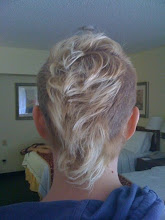
“Jane, it’s great to see you. I love your haircut.” She opened the back car-door and unbuckled Sarah from her car seat. She approached me with the child on her hip and gave me a one-armed hug. Her casual attitude clashed against the serious intimacy I had been imagining; her vanilla scent closed my eyes and demanded to be breathed in.
“I brought your book,” I said, my cheek pressed against her shoulder. I must have stayed too long in the embrace because Sarah began to squirm although Mrs. Dalby didn’t release until I did.
“Great! You ready for a new one?”
“Yeah.” I looked at the ground, the cement floor of her garage. I looked around and saw boxes of WWF action figures stacked in front of life-sized cardboard cutouts of muscle-bound men and women with furious expressions.
“What’s all this?” I pointed at the collection.
“That’s Josh’s, my ex-husband.” She slammed the car door. I imagined Josh as a 300 pound bulging, angry wrestler.
“Come on in; help me change Sarah and put her down.” She walked through the garage door into a small basement area, then up a few stairs to the front room with all the books, where I had been before. The baby’s room smelled like citrus. I stood beside her as she unpinned Sarah’s diaper.
“Where’s her dad?” Anxiety filled my gut waiting for the answer.
“He lives in California. We’re divorced.”
Relief. I knew that what I felt was relief, I knew I did not want him around, but I didn’t understand why. I wanted her all to myself.
“What happened?” I asked. She threw the diaper into a container beside her and reached across me to pluck a new diaper from the package. I leaned closer to her before I moved out of the way. She glanced at me, smiling. Sarah kicked her pudgy pink legs.
“He met someone new. Left even before I knew I was pregnant.”
“Did you tell him about her?”
“Oh, of course. He knows she’s here. He’s not really interested. We were only married nine months. It was a mistake. How are you? How’s Sophie?”
“We’re fine. We just got home from the summer in Wisconsin.”
“Nice.” She finished changing Sarah and put her in her crib. She covered her up and switched on the monitor.
“Let’s go sit and talk.” She held the door for me to pass. We sat on the couch in the front room. I noticed a woman with her in many of the pictures that I hadn’t noticed before. Short dark hair, dimples, a giddy smile squishing her eyes closed.
“How are your mom and dad?”
“Fine, I guess. I haven’t seen them. We stayed with my Gram in her cabin in Lodi all summer with our dog, Missy,” I answered, still staring at the picture.
“So you got some reading done there?” She followed my gaze, looked a few moments at the woman in the picture, smiled.
“Yes, I read the whole book.” That was a lie. I had actually only read about a quarter of the book.
“What’d you think?”
“It’s nice. I like her poems.”
“Good. I made a reading list for you but I don’t know what I did with it. I know the first book I have for you is Black Beauty.” She walked over to one of the bookshelves and plucked out the book.
“What’s it about?”
“It’s the autobiography of a horse. He tells the story of all his adventures. It’s really exciting; I know you’ll enjoy it.” She handed the book to me. I flipped through the pages.
“Thanks. Who’s that woman in the picture?”
She sat down next to me and crossed her legs.
“Her name is Anne. She was someone very special to me.”
My question hung in silence between us.
“What do you want to do when you grow up, Jane?”
“I don’t know—” I considered all the possible answers, all the answers I had heard other kids my age give to that question: doctor, fireman, astronaut. They all seemed so unimportant and uninteresting to me.
“Save the world, I guess.” She laughed a little too loud.
“Bold aspiration for a fifth grader,” she smiled. My face grew hot and I hugged the book to my chest.
“What makes you think the world needs saving?” She tapped my knee. I looked up at her.
“Have you seen it lately?”
“Maybe the world is a matter of perception. Maybe it’s you that needs saving.”
“I don’t need anybody to save me. I’m just fine.”
“Of course you are,” she smiled again, perfecting her face. I was squeezing the book so hard that my arms tingled and my hands felt numb. I walked toward the door.
“I better go home. Sophie’ll wonder where I am.”
She stood up, stretching. I walked close to the picture with the dimpled woman in it and leaned toward it. Mrs. Dalby’s hand was on the side of her neck almost cupping her face, tilting it toward her. Both of them looked so happy.
“Anne and I were in love.”
Her voice startled me. I didn’t believe she said what I heard.
“What, who?” I straightened and stumbled back a step, nearly knocking the picture over. My stomach grew tight and tense.
“She passed away.”
“Oh, I’m sorry. Do you miss her?”
“Like crazy.”
Suddenly sad, she was looking at the image of her and Anne happy together. I couldn’t understand why I asked that question.
“I’m sorry, I didn’t mean…”
“It’s fine, Jane, really.”
She put her arm around my shoulders and guided me toward the door.
“There’s something special about you, Jane.”
A stir rose and whirled in my chest, my stomach, like aching hunger.
“I’m not a kid.”
She laughed, pulled her hair back and twisted it. It was hard to tell through her darker complexion, but I thought I saw her cheeks blush.
“OK, Jane. I hope you’ll visit us again soon.” She walked toward the door, placing a hand on my shoulder, gently squeezing as she passed. The spot where her hand had been burned through my shirt and skin and ached in my bones for her touch again. A woody, musky scent filled the room like freshly cut oak and a lemon tree together with a hint of the light, sweet smell of vanilla. Walking home, that smell, it was in the pages of her book. It lingered on my clothes.
Monday, May 17, 2010

Monday, May 3, 2010
Dirt in My Organs
I went back to the playground every day after that to look for the girl. When I got back to Gram’s cabin that night, I was soaked and my knee was still bleeding. Gram cleaned me up and put a big band aid on my scrape. She washed and patched my jeans, too, only the patch she used was pink and flowery. Nobody would take me for a boy now. They were my only pair of jeans left that fit. I grew out of the others and gave them to Sophie. Gram said she would take me shopping in Chicago but that I would just have to deal with what I had for that summer. When I went to the park, I tied a black bandanna around my leg to cover the pink patch. Sophie looked at me funny but seemed to understand when I told her I hated the patch. The girl never came back. A couple of other kids that came every day took over my attention.
Jamie lived three blocks from our cabin in Lodi. I noticed first his black, lumpish hair and brown skin. There weren’t any other brown kids in Lodi. I was playing catch with Sophie when he asked where I was from. When he said his family was moving to the very same neighborhood in Chicago in the coming autumn, we decided we were meant to be friends. His sister, Heather was Sophie’s age. She was on the playground too, swinging alone. Jamie called to her and she came over to say hi. Her mouth pulled far to the left when she spoke and rested in a softly curved slash when she was silent. One of the two of them must have been adopted because Heather was white.
“Which one of you was adopted?” I asked. Looking from one face to the next, I saw a resemblance and it occurred to me they simply had two different dads. Jamie smiled.
“I was,” he said. I felt the confusion on my face.
“But now that I’m looking, I see that you do look alike so how’s that possible?” Jamie laughed and looked at Heather who laughed in response. Her face pulled out of shape when she laughed too. The smallness of her face and the lack of symmetry contrasted with her big eyes to make them stunning.
“I was left in a basket on the front porch when I was a baby,” he said. Now Sophie and I laughed. I appreciated a good sense of humor. Only neither of them were laughing. In fact, he looked serious, hurt even.
“It’s true, actually. My parents took me in and kept me as their own. They had Heather when I was three,” he said. His parents took him in and cared for him. I shook my head a little because he was telling the truth. When the truth sounds more like a lie than a lie does, it’s usually the truth. I looked at Heather. Without her facial deformity, she really did look like him.
My friendship with Jamie softened the rougher spots of being. Every morning that summer in Lodi, I rode my bike over to Jamie’s house. We pretended our bikes were motorcycles, climbed trees, and built forts in branches.
Almost every night I slept on the wide, wooden slats of his bedroom floor. Most of our tree-forts, built with plywood and brush, seemed to architecturally surpass Jamie’s own home, if not in structural soundness then at least in quality and age. His house was older than the eldest members of the thick-trunked trees in the woods surrounding it, shrouding and secluding it. There was a slight slant to every room and a dissymmetry to the house overall. One half looked barely attached to the other, like the two halves were built separately then placed together. When I asked Jamie about it, he said the east half of the house was newer than the west half. There had once been a fire that required a rebuild but the previous occupants wanted to save money, so they tore down just half the house to rebuild. Water at Jamie’s house smelled like dirt. It came from the poorly maintained well in the side yard. Every time his mom gave me a glass, I looked at the sediment in the bottom when I took a drink and tried not to think about it. The smell in the house was always that well water dirt mixed with the aroma of recently cooked game, usually squirrel, and sometimes, at its most pleasant, the scent of freshly brewed coffee.
Jamie and I rode up to his house on our bikes one day to the sight of his father and another man aiming shotguns at the tree tops around the yard. I skidded to a stop. Jamie rode ahead as if he didn’t notice then stopped and turned back.
“What’s wrong?” he asked.
“They have guns!”
“They’re hunting,” he laughed.
“Hunting what?”
“Squirrels and rabbits.”
“Why?”
“To eat, why else?”
“You kill squirrels and rabbits and then eat them?”
“Dad does. He goes up north to hunt deer, too. That’s my favorite. Especially the jerky he makes from the leftover meat.”
I just nodded, amazed.
The next day I woke up at Jamie’s early, shivering and sore from the hard floor and the cold draft. I waited for him to wake up, counting the spider-web cracks in the ceiling, starting over every time I blinked and lost my place. I heard his dad coming in from the night before. I actually smelled him coming before I heard anything, his one-hundred-proof sweat preceding him. He came through the door of Jamie’s room and peered at me with watery eyes. I feigned sleep with held breath and eyes too tightly shut, trying too hard not to open them. I felt him staring. I felt examined and disgraced. His stare left dirt under my clothes, under my skin, inside my organs. The grit made my bones ache. I heard him walk away and let go of my breath. It wasn’t until a few days later that I decided never to come back to his house again.
I was on the floor sleeping next to Jamie’s bed when I heard a loud whisper.
“Jane, are you awake?” I smelled whiskey and stale sweat. The room was oil-dark and I was lying on my side, my face half-buried in my pillow. I felt him close behind me, his breath hot against the back of my neck, then something wet. I jumped and turned over.
“Shhh, it’s OK.” He reached for my stomach.
Jamie lived three blocks from our cabin in Lodi. I noticed first his black, lumpish hair and brown skin. There weren’t any other brown kids in Lodi. I was playing catch with Sophie when he asked where I was from. When he said his family was moving to the very same neighborhood in Chicago in the coming autumn, we decided we were meant to be friends. His sister, Heather was Sophie’s age. She was on the playground too, swinging alone. Jamie called to her and she came over to say hi. Her mouth pulled far to the left when she spoke and rested in a softly curved slash when she was silent. One of the two of them must have been adopted because Heather was white.
“Which one of you was adopted?” I asked. Looking from one face to the next, I saw a resemblance and it occurred to me they simply had two different dads. Jamie smiled.
“I was,” he said. I felt the confusion on my face.
“But now that I’m looking, I see that you do look alike so how’s that possible?” Jamie laughed and looked at Heather who laughed in response. Her face pulled out of shape when she laughed too. The smallness of her face and the lack of symmetry contrasted with her big eyes to make them stunning.
“I was left in a basket on the front porch when I was a baby,” he said. Now Sophie and I laughed. I appreciated a good sense of humor. Only neither of them were laughing. In fact, he looked serious, hurt even.
“It’s true, actually. My parents took me in and kept me as their own. They had Heather when I was three,” he said. His parents took him in and cared for him. I shook my head a little because he was telling the truth. When the truth sounds more like a lie than a lie does, it’s usually the truth. I looked at Heather. Without her facial deformity, she really did look like him.
My friendship with Jamie softened the rougher spots of being. Every morning that summer in Lodi, I rode my bike over to Jamie’s house. We pretended our bikes were motorcycles, climbed trees, and built forts in branches.
Almost every night I slept on the wide, wooden slats of his bedroom floor. Most of our tree-forts, built with plywood and brush, seemed to architecturally surpass Jamie’s own home, if not in structural soundness then at least in quality and age. His house was older than the eldest members of the thick-trunked trees in the woods surrounding it, shrouding and secluding it. There was a slight slant to every room and a dissymmetry to the house overall. One half looked barely attached to the other, like the two halves were built separately then placed together. When I asked Jamie about it, he said the east half of the house was newer than the west half. There had once been a fire that required a rebuild but the previous occupants wanted to save money, so they tore down just half the house to rebuild. Water at Jamie’s house smelled like dirt. It came from the poorly maintained well in the side yard. Every time his mom gave me a glass, I looked at the sediment in the bottom when I took a drink and tried not to think about it. The smell in the house was always that well water dirt mixed with the aroma of recently cooked game, usually squirrel, and sometimes, at its most pleasant, the scent of freshly brewed coffee.
Jamie and I rode up to his house on our bikes one day to the sight of his father and another man aiming shotguns at the tree tops around the yard. I skidded to a stop. Jamie rode ahead as if he didn’t notice then stopped and turned back.
“What’s wrong?” he asked.
“They have guns!”
“They’re hunting,” he laughed.
“Hunting what?”
“Squirrels and rabbits.”
“Why?”
“To eat, why else?”
“You kill squirrels and rabbits and then eat them?”
“Dad does. He goes up north to hunt deer, too. That’s my favorite. Especially the jerky he makes from the leftover meat.”
I just nodded, amazed.
The next day I woke up at Jamie’s early, shivering and sore from the hard floor and the cold draft. I waited for him to wake up, counting the spider-web cracks in the ceiling, starting over every time I blinked and lost my place. I heard his dad coming in from the night before. I actually smelled him coming before I heard anything, his one-hundred-proof sweat preceding him. He came through the door of Jamie’s room and peered at me with watery eyes. I feigned sleep with held breath and eyes too tightly shut, trying too hard not to open them. I felt him staring. I felt examined and disgraced. His stare left dirt under my clothes, under my skin, inside my organs. The grit made my bones ache. I heard him walk away and let go of my breath. It wasn’t until a few days later that I decided never to come back to his house again.
I was on the floor sleeping next to Jamie’s bed when I heard a loud whisper.
“Jane, are you awake?” I smelled whiskey and stale sweat. The room was oil-dark and I was lying on my side, my face half-buried in my pillow. I felt him close behind me, his breath hot against the back of my neck, then something wet. I jumped and turned over.
“Shhh, it’s OK.” He reached for my stomach.
Friday, April 16, 2010
Geometry and Rain
Missy sprinted out ahead of us up the hill. At the top, just off to the left tucked into a cove of tall pine trees were two naked bodies on a blanket. Startled, I stopped abruptly and stared. Sophie bumped into my back.
“What,” she said and I pointed. She gasped and slapped her hand over her mouth. The couple was about 50 feet away and on a bit of a slope so the full length of them was visible. The woman was on top, her hair falling over the face of the other, her hips writhing. The curves and angles of her body and the rhythm of their movements mesmerized me. I can’t say how long we were standing and staring but it seemed quite long. When they made more and more noise, Missy came back to investigate. She ran too close to them and barked, causing them to jump and look up. The woman’s eyes met mine and I instinctively crouched. Sophie ran. The couple grasped for their clothes or the blanket or anything to cover up. I called to Missy and felt my face go hot, my hands numb. Missy ran past me after Sophie and I found my legs were stuck. I couldn’t move. The man wrestled with his pants and cursed. The woman stared back at me like she was waiting for something else to happen. Something clenched in my throat and I crouched lower, panicking. I had a wild fear that she recognized me, knew who I was and would tell on me because maybe I had done something wrong. The man had found his way into his pants and stood up, scowling at me.
“Get the fuck outta here,” he yelled and started walking toward me. My legs came back alive and I burst from the grass and ran and ran.
I found Sophie standing in front of a log cabin with Missy at her feet. It had an inviting front porch that wrapped around the sides. A flowery sign that hung from the door read: “Open” and warm smells of fresh bread and sweet berries came from the house. Without a word, we mounted the stairs to the porch and knocked on the door. I saw movement from a window off to the right and then a clatter from within. Spooked, I took Sophie’s hand and was about to pull her away and leave the place when the door swung open and an old woman emerged with a basket of lollipops. She was short and white haired, round and kind looking. A wide spread smile seemed to be her only expression.
“Hello there, girls, no need to knock, you know; we’re open for business here. Welcome to Matt Donahue’s. Here, have a free sucker,” she said, her voice scratchy, warm. Sophie’s hand darted out and snatched a sucker. She inspected the flavor, frowned, and put it back. The old woman laughed and brought the basket lower so Sophie could see better.
“Take a look, sweetie, and pick your favorite color. I like green; tastes like apples,” she said. Sophie peered into the basket and fished around until she found the pale yellow wrapper of butterscotch. She took it and smiled up at the old woman.
“Thank you, lady,” she said, blushing and sticking the lollipop into her mouth.
“My name is Mary Mare; what’s yours?”
“Sophie,” she said and looked at me.
“I’m Jane; we’re here for the summer with our grandparents,” I said.
“Well, it’s nice to meet you both. Please come in, but your dog will have to wait out here,” she said. I told Missy to stay and pointed at her like I’d watched my dad do then went in.
The bins full of candy were the first thing I saw. Behind the counter was a haggard woman with black stringy hair flecked with gray, smoking a cigarette and reading a magazine. She glanced up at us but didn’t say a word or even smile.
“This is Mrs. Donahue, girls, one of the owners here. This is Jane and Sophie, here in town with their grandma and grandpa for the summer,” Mary Mare said. Mrs. Donahue mumbled something I couldn’t hear and hunched further over her magazine. Mary Mare put an apron on and walked into a back room where all the nice smells were coming from. Sophie and I grabbed bunches of Mary Janes and Slo Pokes and piled them on the counter.
We paid for the candy with handfuls of pennies that we counted out in front of Mrs. Donahue’s phantom white face, smoke spilling thick from her mouth and nose.
“Can we have a bag for the candy?” I asked.
“You got pockets?” she said, then turned around on her stool and went back to her magazine. I looked at Sophie and giggled while we filled our pockets. She stuck her tongue out at Mrs. Donahue’s back. I slapped a hand over my mouth and snorted laughter. We ran out laughing and stuffing pieces of candy in our mouths.
I watched for signs of the couple on the way back to the cabin but they were gone. Missy sniffed around the spot where there blanket left a crushed rectangle in the grass and I thought of the white hips lifting and falling. I thought of sleeping bags packed with naked bodies and dark nights lit by stars. I thought of Mrs. Dalby as that naked woman and an uproar of fluttery excitement erupted in my gut. I ran hard back to the cabin kicking up dirt.
Later that day I sat with Gram playing Uno, something she invited me to do often, only to have the cards lie untouched while we had long conversations instead, when she started talking about my dad.
“If your dad would just grow up, he’d be a good boy.” She shook her head and shuffled the cards again.
“Why do you hate him?”
“Oh, honey, I don’t hate him. We struggle with ‘im, that’s all. His parents are the real problem. When you were just a baby, you and your mom and dad lived in our four-flat right above us. Well, your dad was a janitor at some crummy hotel downtown where they gave ‘im drugs. He’d come home high as a kite and beat on yer mom. He’d be real violent and just nasty. He’d grab and twist ‘er—” I knew what she was talking about. My dad rarely hit my mom when they fought, although she hit him freely. Instead, he had a way of grabbing and twisting parts of her that stood out: her nose, breasts, ears.
“So anyway, your mom asked Papa to keep ‘im out when he was high like that. So wouldn’t ya know it, he come home in a stupor and Papa just stopped him right at the door, told ‘im he can’t come in all coked up like that. Well, Bobby starts cursin’ and yellin,’ sayin’ it’s all Christine’s fault, callin’ her bad names. Papa says to ‘im, we saw the bruises; we know what he did. So then Bobby hauls off and punches your Papa right in the nose. I come runnin’ out to help ‘im and he punches me, too. That was it. Papa had to get ‘is gun out and force ‘im to leave that way.”
Her voice was louder and higher and her face red. I pictured my Papa going to get the gun from inside their apartment. When he returned to the sight of his wife being brutalized, however, his finger stiffened against the trigger, his vision blurred red, and the unambiguous, nearly palpable urge to kill overcame him. My father must have seen this distinctly when he raised his eyes to Papa’s, his glare displacing air in its wake. He must have felt the breeze from it.
Gram was shuffling the cards again.
“Then what happened?” I tapped her shoulder. She put the cards down and took a deep breath.
“I shouldn’t be goin’ on like this to you.”
“I wanna know; it’s OK.”
“Well, that was it. He finally left. But then he went and told his police-captain daddy on us and they come an’ arrest your Papa. They never did nothin’ to help him. They just let ‘im stay up there in that attic when he was comin’ down all shakin’ and sick. They even sat up there, held ‘im down all night once, he was so bad. Well you know me, I tell ‘em how it is. I went marchin’ right over there an’ told your grandma to her face: Your son is sick. You have to get him help. Take him to a hospital or a drug treatment place. Don’t just keep him up there in that attic leaving him to rot.”
She grabbed my hands and squeezed them; her eyes were wide and angry.
“She comes back at me and tells me it’s Christine’s fault. Says she drives ‘im to it! I just told her plain, that son of yours will die from this. It will kill ‘im dead.” She clasped her lips and stared at me.
“What’d she say?”
“If she didn’t just slam that door right in my face!” She started shuffling the cards again, shook her head. My head was clamoring. I rubbed my temples.
“What’s with that hair, young lady?” Gram grabbed a lock from the side of my head and flipped it.
“What?”
“It’s too long and straggly. I’m gonna cut it. Go get me the scissors.”
I didn’t like having it combed; it was something I always fought, and I always had it up in a ponytail, so I agreed. She set me in a chair, placed a shallow bowl over my head, and carefully cut the hair along the edge of the bowl, leaving me with a perfectly even, boyish cut.
Just after dark, I went to the nearby playground sporting my new haircut accessorized with red rubber boots, a blue Izod sweater, and jeans with holes in the knees. Before I left, I looked approvingly into the mirror: fun hair, cool outfit, straight hips. There was a group playing keep-away around the slide, girls against boys. I joined in, climbing up the slide after one orange-haired boy, his bright locks bouncing cheerfully. Arriving at the top, he gave a furtive peek behind him, glancing down at me, small eyes indistinguishable among a mass of fiery freckles, he swiftly disappeared. I climbed into position to go down after him when I was abruptly frozen in my spot. There was a girl down below pointing squarely at me, shouting: “There he is, up there! Get him!”
He? Him? I looked around, flushed, redly smiling, preparing to laugh when her mistake was discovered and pointed out by one of the other kids. I shivered. A voice behind me shouted: “Go down, man, run!” I swooped down, leapt to my feet at the bottom, and ran, settling in to the queer power of how it must always feel to be a boy. It was intoxicating, yet frightening to deceive these girls into believing that I belonged on the opposite team. At any moment they could notice my soft, long eyelashes, a girlish curve to my cheek. I could move in some un-boyish way and give myself away. But when I high-fived the boys and took off away from the girls, they believed I was a boy and they changed. The differences were subtle, but unmistakable. I treasured being chased by them, their squealing and giggling, their blushing cheeks and flirtatious grins. I was completely transformed in their eyes and its effect over me was total.
I ran fast, away from a dark-haired girl, looking back every few seconds to see her wide open laughter and ember-lit eyes pursuing me. Without warning I tripped on a protruding root and fell, my knee slashed open on a piece of slate rock, my face dug into rocky soil. I lay there, splayed out on the ground with a bleeding knee and a scraped cheek. It began to rain. The girls screamed, everyone scattered. I turned over and found the dark haired girl crouched next to me. Our faces, so close, seemed to freeze, eyes locked, her black pupils like tiny oil spills: shiny, beckoning. A car honked in the street. A truck rumbled by. The gritty taste of dirt lingered in my mouth, the smell of extinguished campfires hung, trapped under the rain. She placed one small hand on my shoulder, brushed a fingertip across my scraped cheek, her eyes asking if it hurt. I attempted to speak, but couldn’t get my mouth to move. The rain fell harder; a voice called from a distance. She leaned forward, pucker-lipped, close-eyed, summer-scented, and left the soft tremble of a kiss on my wounded cheek. She ran off. I sat there, drenched, a smile so big it ached.
“What,” she said and I pointed. She gasped and slapped her hand over her mouth. The couple was about 50 feet away and on a bit of a slope so the full length of them was visible. The woman was on top, her hair falling over the face of the other, her hips writhing. The curves and angles of her body and the rhythm of their movements mesmerized me. I can’t say how long we were standing and staring but it seemed quite long. When they made more and more noise, Missy came back to investigate. She ran too close to them and barked, causing them to jump and look up. The woman’s eyes met mine and I instinctively crouched. Sophie ran. The couple grasped for their clothes or the blanket or anything to cover up. I called to Missy and felt my face go hot, my hands numb. Missy ran past me after Sophie and I found my legs were stuck. I couldn’t move. The man wrestled with his pants and cursed. The woman stared back at me like she was waiting for something else to happen. Something clenched in my throat and I crouched lower, panicking. I had a wild fear that she recognized me, knew who I was and would tell on me because maybe I had done something wrong. The man had found his way into his pants and stood up, scowling at me.
“Get the fuck outta here,” he yelled and started walking toward me. My legs came back alive and I burst from the grass and ran and ran.
I found Sophie standing in front of a log cabin with Missy at her feet. It had an inviting front porch that wrapped around the sides. A flowery sign that hung from the door read: “Open” and warm smells of fresh bread and sweet berries came from the house. Without a word, we mounted the stairs to the porch and knocked on the door. I saw movement from a window off to the right and then a clatter from within. Spooked, I took Sophie’s hand and was about to pull her away and leave the place when the door swung open and an old woman emerged with a basket of lollipops. She was short and white haired, round and kind looking. A wide spread smile seemed to be her only expression.
“Hello there, girls, no need to knock, you know; we’re open for business here. Welcome to Matt Donahue’s. Here, have a free sucker,” she said, her voice scratchy, warm. Sophie’s hand darted out and snatched a sucker. She inspected the flavor, frowned, and put it back. The old woman laughed and brought the basket lower so Sophie could see better.
“Take a look, sweetie, and pick your favorite color. I like green; tastes like apples,” she said. Sophie peered into the basket and fished around until she found the pale yellow wrapper of butterscotch. She took it and smiled up at the old woman.
“Thank you, lady,” she said, blushing and sticking the lollipop into her mouth.
“My name is Mary Mare; what’s yours?”
“Sophie,” she said and looked at me.
“I’m Jane; we’re here for the summer with our grandparents,” I said.
“Well, it’s nice to meet you both. Please come in, but your dog will have to wait out here,” she said. I told Missy to stay and pointed at her like I’d watched my dad do then went in.
The bins full of candy were the first thing I saw. Behind the counter was a haggard woman with black stringy hair flecked with gray, smoking a cigarette and reading a magazine. She glanced up at us but didn’t say a word or even smile.
“This is Mrs. Donahue, girls, one of the owners here. This is Jane and Sophie, here in town with their grandma and grandpa for the summer,” Mary Mare said. Mrs. Donahue mumbled something I couldn’t hear and hunched further over her magazine. Mary Mare put an apron on and walked into a back room where all the nice smells were coming from. Sophie and I grabbed bunches of Mary Janes and Slo Pokes and piled them on the counter.
We paid for the candy with handfuls of pennies that we counted out in front of Mrs. Donahue’s phantom white face, smoke spilling thick from her mouth and nose.
“Can we have a bag for the candy?” I asked.
“You got pockets?” she said, then turned around on her stool and went back to her magazine. I looked at Sophie and giggled while we filled our pockets. She stuck her tongue out at Mrs. Donahue’s back. I slapped a hand over my mouth and snorted laughter. We ran out laughing and stuffing pieces of candy in our mouths.
I watched for signs of the couple on the way back to the cabin but they were gone. Missy sniffed around the spot where there blanket left a crushed rectangle in the grass and I thought of the white hips lifting and falling. I thought of sleeping bags packed with naked bodies and dark nights lit by stars. I thought of Mrs. Dalby as that naked woman and an uproar of fluttery excitement erupted in my gut. I ran hard back to the cabin kicking up dirt.
Later that day I sat with Gram playing Uno, something she invited me to do often, only to have the cards lie untouched while we had long conversations instead, when she started talking about my dad.
“If your dad would just grow up, he’d be a good boy.” She shook her head and shuffled the cards again.
“Why do you hate him?”
“Oh, honey, I don’t hate him. We struggle with ‘im, that’s all. His parents are the real problem. When you were just a baby, you and your mom and dad lived in our four-flat right above us. Well, your dad was a janitor at some crummy hotel downtown where they gave ‘im drugs. He’d come home high as a kite and beat on yer mom. He’d be real violent and just nasty. He’d grab and twist ‘er—” I knew what she was talking about. My dad rarely hit my mom when they fought, although she hit him freely. Instead, he had a way of grabbing and twisting parts of her that stood out: her nose, breasts, ears.
“So anyway, your mom asked Papa to keep ‘im out when he was high like that. So wouldn’t ya know it, he come home in a stupor and Papa just stopped him right at the door, told ‘im he can’t come in all coked up like that. Well, Bobby starts cursin’ and yellin,’ sayin’ it’s all Christine’s fault, callin’ her bad names. Papa says to ‘im, we saw the bruises; we know what he did. So then Bobby hauls off and punches your Papa right in the nose. I come runnin’ out to help ‘im and he punches me, too. That was it. Papa had to get ‘is gun out and force ‘im to leave that way.”
Her voice was louder and higher and her face red. I pictured my Papa going to get the gun from inside their apartment. When he returned to the sight of his wife being brutalized, however, his finger stiffened against the trigger, his vision blurred red, and the unambiguous, nearly palpable urge to kill overcame him. My father must have seen this distinctly when he raised his eyes to Papa’s, his glare displacing air in its wake. He must have felt the breeze from it.
Gram was shuffling the cards again.
“Then what happened?” I tapped her shoulder. She put the cards down and took a deep breath.
“I shouldn’t be goin’ on like this to you.”
“I wanna know; it’s OK.”
“Well, that was it. He finally left. But then he went and told his police-captain daddy on us and they come an’ arrest your Papa. They never did nothin’ to help him. They just let ‘im stay up there in that attic when he was comin’ down all shakin’ and sick. They even sat up there, held ‘im down all night once, he was so bad. Well you know me, I tell ‘em how it is. I went marchin’ right over there an’ told your grandma to her face: Your son is sick. You have to get him help. Take him to a hospital or a drug treatment place. Don’t just keep him up there in that attic leaving him to rot.”
She grabbed my hands and squeezed them; her eyes were wide and angry.
“She comes back at me and tells me it’s Christine’s fault. Says she drives ‘im to it! I just told her plain, that son of yours will die from this. It will kill ‘im dead.” She clasped her lips and stared at me.
“What’d she say?”
“If she didn’t just slam that door right in my face!” She started shuffling the cards again, shook her head. My head was clamoring. I rubbed my temples.
“What’s with that hair, young lady?” Gram grabbed a lock from the side of my head and flipped it.
“What?”
“It’s too long and straggly. I’m gonna cut it. Go get me the scissors.”
I didn’t like having it combed; it was something I always fought, and I always had it up in a ponytail, so I agreed. She set me in a chair, placed a shallow bowl over my head, and carefully cut the hair along the edge of the bowl, leaving me with a perfectly even, boyish cut.
Just after dark, I went to the nearby playground sporting my new haircut accessorized with red rubber boots, a blue Izod sweater, and jeans with holes in the knees. Before I left, I looked approvingly into the mirror: fun hair, cool outfit, straight hips. There was a group playing keep-away around the slide, girls against boys. I joined in, climbing up the slide after one orange-haired boy, his bright locks bouncing cheerfully. Arriving at the top, he gave a furtive peek behind him, glancing down at me, small eyes indistinguishable among a mass of fiery freckles, he swiftly disappeared. I climbed into position to go down after him when I was abruptly frozen in my spot. There was a girl down below pointing squarely at me, shouting: “There he is, up there! Get him!”
He? Him? I looked around, flushed, redly smiling, preparing to laugh when her mistake was discovered and pointed out by one of the other kids. I shivered. A voice behind me shouted: “Go down, man, run!” I swooped down, leapt to my feet at the bottom, and ran, settling in to the queer power of how it must always feel to be a boy. It was intoxicating, yet frightening to deceive these girls into believing that I belonged on the opposite team. At any moment they could notice my soft, long eyelashes, a girlish curve to my cheek. I could move in some un-boyish way and give myself away. But when I high-fived the boys and took off away from the girls, they believed I was a boy and they changed. The differences were subtle, but unmistakable. I treasured being chased by them, their squealing and giggling, their blushing cheeks and flirtatious grins. I was completely transformed in their eyes and its effect over me was total.
I ran fast, away from a dark-haired girl, looking back every few seconds to see her wide open laughter and ember-lit eyes pursuing me. Without warning I tripped on a protruding root and fell, my knee slashed open on a piece of slate rock, my face dug into rocky soil. I lay there, splayed out on the ground with a bleeding knee and a scraped cheek. It began to rain. The girls screamed, everyone scattered. I turned over and found the dark haired girl crouched next to me. Our faces, so close, seemed to freeze, eyes locked, her black pupils like tiny oil spills: shiny, beckoning. A car honked in the street. A truck rumbled by. The gritty taste of dirt lingered in my mouth, the smell of extinguished campfires hung, trapped under the rain. She placed one small hand on my shoulder, brushed a fingertip across my scraped cheek, her eyes asking if it hurt. I attempted to speak, but couldn’t get my mouth to move. The rain fell harder; a voice called from a distance. She leaned forward, pucker-lipped, close-eyed, summer-scented, and left the soft tremble of a kiss on my wounded cheek. She ran off. I sat there, drenched, a smile so big it ached.
Thursday, April 1, 2010
All The Good Parents Were Taken
“How old is she?” I asked.
“17 months. Isn’t she beautiful?”
“Yeah. And she’s so good too.”
“She’s pretty happy just being her,” she said, looking straight ahead, walking slowly, a slow smile pulling up the corners of her mouth. Her hair was a mass of dark brown, almost black, curls, twisted up in a loose knot at the back of her head. Tendrils fell freely and bounced around her face in soft coils. She was one of the youngest of all the teachers and counselors at that school, just a few years younger than my mom. Her skin was deeply tanned and she had small, almost unnoticeable lines around her eyes and mouth that bunched together when she smiled and rested waiting when she didn’t. Somehow her soft beauty offended me, the easy way she carried herself. As if this was any regular day.
“Here’s our house.” She turned up the driveway of a small, ranch-style home.
“I can’t believe I’ve never seen you before in the neighborhood,” I said.
“I’ve seen you around,” she said and smiled at me. My cheeks grew hot and I stared at the cement. I knew that people in the neighborhood talked about my parents and how they fight. One time my mom threw all my dad’s clothes and shoes and even a large amount of cash out on the front lawn in the middle of a rage. It was after they had a fight and he had already left the house when she started gathering armfuls of his things to take outside and scatter across the lawn and sidewalk, kicking some of it wildly out over the curb and into the street, screaming all the while. People came out of their houses to stare. Then my mom came out with a shoebox filled with cash and emptied it out onto the sidewalk. After she walked back inside to get more, people started closing in and picking up bills. That was when I picked up the phone and called the police. It hadn’t been the first time: 3309 Avers was an address the police knew well.
“Have a seat right there, girls. I’m just going to put Sarah down for a nap. Be right back.” We sat down on a couch in the front room. Sophie was still clinging to me but she had her head up and was looking around. The place was filled with pictures of Mrs. Dalby with other dark-haired, dark-eyed, beautiful people in some exotic land. There were lots of candles in large, ornate holders garnished with colorful potpourri. There were several bookshelves lined neatly with hardcover books. I had never seen so many books and each of them intrigued me. It was an altogether new feeling, like a tickle in my chest. My heart, I imagined, sprouted a feather and it fluttered against inner chambers I’d never see. Names like Milton, Wordsworth, Shelley, Whitman, Dickinson, Freud; some I had heard before and some I only sensed the greatness of. Chaucer, Cervantes, Jane Austen, George Eliot, Charles Dickens, Ibsen, Virginia Woolf, Pablo Neruda, all in various scripts, sizes, and colors, their spines beaming with rigid importance.
“Can I get you girls anything to eat or drink?” she asked, emerging from a doorway across the room.
“No, thank you, we’re fine,” I said, still scanning the books.
“You like fiction?” she asked and sat down next to me. She had taken the loose knot out and her hair fell freely over her shoulders and down to the middle of her back.
“I really do,” I answered, now staring at her.
“What’s your favorite?” she asked, leaning back and crossing her legs.
“Huckleberry Finn.”
“Oh, that’s a great one. One of my favorites too. I’ve read it maybe a hundred times. What else?”
“I don’t know. I haven’t read much else.”
“Well, you can borrow anything you want that you see here. I have a regular library. Just make sure you take good care of them and return them when you’re done.”
“Really?”
“Yes, really. Anything you want.” I wiggled out of Sophie’s grasp and got up. I pulled a thick volume from the top of one of the shelves: The Poems of Emily Dickinson.
“Ah. You want poetry?”
“This first, then I’ll borrow something else?”
“Sounds good to me. I’ll even make you a reading list; how about that?”
“Yes! I mean, yeah sure.” I felt my hot face again and looked at the floor to hide it. She laughed and messed my hair.
“You can come here anytime, Jane.” She looked at Sophie and smoothed her hair back with her palm. “You too, sweetheart. What’s your name?” Sophie looked at me.
“Her name’s Sophie,” I said.
“Hi, Sophie. That’s a beautiful name.”
Sophie smiled at her and actually spoke. “Thank you,” she whispered.
“You can talk to me about what happened if you want to.” She turned to face me again.
“My mom and dad had another fight,” I blurted. She nodded her head.
“She started it because she insulted him. Said he’s never going to amount to anything but a janitor. He started beating her up like he always does and then she knocked him out. I think she threw something at his head and cut him. He pinned her down after that and was bleeding on her from his head. I walked in and he looked up. That’s when she punched him in the head where his cut was and knocked him out for good. She told us to leave and call for help.” I watched for her expression of shock and horror but it didn’t come. She kept her gaze level. Concerned, sad even, but not shocked.
“So this happens often with your mom and dad?”
“All the time. She always has some mark on her. She lies and tells us she fell or accidentally walked into a wall.”
“She doesn’t lie!” Sophie said, shooting an angry look at me. Mrs. Dalby put an arm around her. It was easier for Sophie to believe the lies. They, along with my mother’s unblinking almond eyes, held her like vice grips in place, allowing her to ignore things into nonexistence. I always knew the truth though I wished I didn’t, or at least wished for a place big enough to hold it for me. My mom and her lies swarmed inside a hollow place in my gut.
That evening just before nightfall, Sophie and I walked home slowly and in silence. When we reached the house it seemed as if nobody was home, but for the door being unlocked and the car parked out front. Inside, it was quiet and dark. I locked the front door behind us and we went straight to bed. Waiting for sleep, my head was filled with thoughts of Mrs. Dalby. Her books, her photos, the father of her baby.
“What are you thinking about?” I asked Sophie, wanting a break from my thoughts.
“Mrs. Dalby’s nice.” She said.
“Yeah.” I said.
“Where do you think her husband is?”
“Maybe she’s not married.”
“She has to be married, she has a baby.”
“Maybe she’s divorced, or never got married to begin with.”
“What’s divorced?
I thought carefully about how to answer. When Sophie asked me a question about what something meant or what it was, I felt obliged to tell her the truth as accurately as possible. I wanted my answers to be factual, so if she looked it up later in an encyclopedia, the information would check out.
“Divorced is when a married couple breaks up in court. They legally undo their marriage,” I said. Satisfied with my answer, I smiled into the dark.
“Oh,” she answered back. After a long silence, she asked, “why do people do that?”
“Lots of reasons, I’m sure. They fight too much, they stop loving each other. Mom and dad will get divorced one day.”
“No they won’t. Don’t say that,” she said in a high voice, sounding near tears.
“I’m sorry, Sophie; I was just kidding. I’m sorry I said it. Everything will be alright, I promise,” I said in the most reassuring tone I could muster. She did not reply again. I lay listening to the soft night noises. My mom told us it was the house shifting and settling. I fell asleep praying that what I told Sophie would be true.
The next day, Sophie and I woke to the absence of my mother. This day there would be no facing her beat-up face and accompanying story. Only my dad with red, raised scratch marks across his neck and cheek and a few stitches over his right eye.
“Where’s Mom?” I asked.
“Jail.” He was sitting in his chair eating a bowl of cereal.
“Why?”
“You see this?” He glared at me and pointed to his stitches.
“You hadda go and call the cops, so they came. Saw what she did and cuffed ‘er. Took ‘er away.”
“Mom told me to go.”
“Yeah, I know. ‘Sokay.” His mouth was full of half-chewed cheerios. He put the bowl down and got up. He grabbed his white t-shirt from the back of the chair and pulled it over his head. Chest hairs sprang out from the collar.
Without a notion of where we were going, he took us out. We walked toward the corner of Milwaukee and Belmont Avenues, where I knew there was a pet store. Galvanized by the throng of hurried people, steel, and concrete, there is a wholesome violence about the city of Chicago on a Saturday afternoon.
The smell hit us first. Fur-covered bodies in small-barred cages soiled with urine and dog spit. Echoing all around were their varying, inflected barks―high pitched screeches, low ambiguous moans, desperate howls, curt, loud outcries.
Sophie approached the cage of a small, white, black-flecked Siberian Husky. She had unnaturally beautiful, darkly framed eyes, one unlimited blue, one bottomless brown. Under our attention she was a blaze of trembling, amplified life, flashes of pinkish skin against thick tufted fur, glints of white sharp teeth and black arced lips, lustrous flaring nostrils and blurred whipping tail. Sophie’s groping hands thrust as far as her arms could reach through the bars of the cage while the wet length of the dog’s tongue flapped against her small face. She became our dog in that moment.
“I want this one!” Sophie yelled.
“What should we name her?” I asked. Sophie just stared at me, half her little body still jammed inside the dog’s cage.
“It’s gotta have a name,” my dad said. Sophie looked at the dog thoughtfully, tilted her face, grabbed her ear.
“Missy,” she said.
“What’s Missy gonna set me back?” my dad asked the clerk, pulling a fat wad of bills from his back pocket.
“She’s $500 even,” the store clerk said. My dad flipped out five hundred dollar bills as if they were singles, and handed them to the clerk. The clerk looked at the cash and blushed.
“Oh, OK. Just follow me to the register over here.” He turned and bumped into another dog’s cage, nearly tripped over his own feet. My dad followed him to pay for Missy while another clerk took her out of the cage and fitted her with a collar and a leash so we could walk her home.
On the way, we stopped off at Jefferson Park to play with Missy. We ran and ran in circles while Missy chased us. She broke away and sprinted wide circles around us, her body low to the ground, ears plastered back, teeth and eyes glinting.
My dad told us that dogs traveled together in the wilderness in what were called packs. Missy, Sophie, and I became a pack. That first night, exhausted from playing hard with Missy for hours, we slept as one entwined pile together on Sophie’s bed. That night of sleep was peace for me for the rest of my life.
My dad had resisted our pleas to adopt a dog for years before, always saying it wasn’t fair to raise a dog in the city, confining it to a chain in the yard. One of the conditions he gave us for keeping Missy was that we take her to Wisconsin during the summer, where my grandparents went to spend the summers in a cabin by a lake.
Besides her brother Joe, my mom had an older sister, Gracie. As a child, my aunt Grace had suffered several seizures. She would alternately go blind and fall over, spontaneously losing her balance. Tests revealed a brain tumor. She opted to have surgery that would remove the mass and relieve the pressure, reducing the seizures but not stopping them. The surgery was a relative success, and Grace went on to marry Ronald and live a happy life. Her seizures continued but were less frequent. As a result, a pleasant dulling of awareness was both her burden and her blessing. She was genuinely kind and easily happy, a delightful presence.
Their father, whom Sophie and I called Papa, was a young immigrant from Greece when he married a girl of Polish, Bohemian, and German descent named Carol, known to Sophie and me as Gram. She came from an old, lawless Chicago family. Her mother, Lola, was an alcoholic and a known bootlegger after the Volstead Act (better known as the National Prohibition Act) was enacted by Congress in 1919. She was a tough, rugged woman with bullet-holes in her legs from being shot at while she ran from the authorities carrying outlawed booze to saloons and speakeasies, or so the legend goes. Lola’s husband, Gram’s father, straight-edged Gary, was a door-to-door Hoover salesman from the age of 18 until the time of his death in 1944. It was the early 1900’s when William Henry Hoover revolutionized vacuum technology by producing the first upright, bag-on-a-stick, domestic carpet sweeper. By the decade of my great-grandfather’s death, more than 70% of all vacuum cleaners were sold door-to-door. And then there was Lou, Gram’s brother, who was a rather prominent gangster, rumored to have been one of Al Capone’s minions and to have played a part in the famous St. Valentine’s Day Massacre of 1929.
With an alcoholic mother, Gram grew up to be a woman constantly either fearing or protecting, always loving. True to its tendency, the disease skipped Gram’s generation and landed squarely on her second-born, my mother. It is for this reason, I believe, that I have always shared a special bond with Gram. Each of us had, from an early age, been heaped with the sufferings and destructions of our mothers. That first summer when we got Missy, Mom needed a break, so Gram invited us up there. We went with my aunt Grace and my uncle Joe.
Missy had land there to run and a lake to swim in. And it was quiet, so quiet compared to Chicago. The trees and water with their greens, blues, and browns created together an intensified soundlessness. Matt Donahue’s was the candy store, a log cabin at the top of a dirt road, hidden by thick woods so that it seemed like a secret that only we knew about. The old lady who worked there, Mrs. Mare, cooked homemade bread and jam and sold them to the people in town. But the reason Sophie and I nicknamed it the candy store was the penny candy she sold out of big, bottomless bins at the front of the store. Tootsie Rolls, Lemon Heads, sugar taffy, bubble gum, Alexander the Grapes, everything no more then a penny a piece. We filled our pockets for a quarter and went on our way. I’ll never forget finding the candy store for the first time.
Sophie and I set out walking with Missy through the playground into a big open field with tall grass. Missy bounded through like a rabbit; she was so happy in that field we decided to walk all the way across. When we reached the far side and were about to start back, I noticed a small dirt road that emerged from the bordering woods and snake uphill. Without speaking, I started toward it and Sophie followed.
“17 months. Isn’t she beautiful?”
“Yeah. And she’s so good too.”
“She’s pretty happy just being her,” she said, looking straight ahead, walking slowly, a slow smile pulling up the corners of her mouth. Her hair was a mass of dark brown, almost black, curls, twisted up in a loose knot at the back of her head. Tendrils fell freely and bounced around her face in soft coils. She was one of the youngest of all the teachers and counselors at that school, just a few years younger than my mom. Her skin was deeply tanned and she had small, almost unnoticeable lines around her eyes and mouth that bunched together when she smiled and rested waiting when she didn’t. Somehow her soft beauty offended me, the easy way she carried herself. As if this was any regular day.
“Here’s our house.” She turned up the driveway of a small, ranch-style home.
“I can’t believe I’ve never seen you before in the neighborhood,” I said.
“I’ve seen you around,” she said and smiled at me. My cheeks grew hot and I stared at the cement. I knew that people in the neighborhood talked about my parents and how they fight. One time my mom threw all my dad’s clothes and shoes and even a large amount of cash out on the front lawn in the middle of a rage. It was after they had a fight and he had already left the house when she started gathering armfuls of his things to take outside and scatter across the lawn and sidewalk, kicking some of it wildly out over the curb and into the street, screaming all the while. People came out of their houses to stare. Then my mom came out with a shoebox filled with cash and emptied it out onto the sidewalk. After she walked back inside to get more, people started closing in and picking up bills. That was when I picked up the phone and called the police. It hadn’t been the first time: 3309 Avers was an address the police knew well.
“Have a seat right there, girls. I’m just going to put Sarah down for a nap. Be right back.” We sat down on a couch in the front room. Sophie was still clinging to me but she had her head up and was looking around. The place was filled with pictures of Mrs. Dalby with other dark-haired, dark-eyed, beautiful people in some exotic land. There were lots of candles in large, ornate holders garnished with colorful potpourri. There were several bookshelves lined neatly with hardcover books. I had never seen so many books and each of them intrigued me. It was an altogether new feeling, like a tickle in my chest. My heart, I imagined, sprouted a feather and it fluttered against inner chambers I’d never see. Names like Milton, Wordsworth, Shelley, Whitman, Dickinson, Freud; some I had heard before and some I only sensed the greatness of. Chaucer, Cervantes, Jane Austen, George Eliot, Charles Dickens, Ibsen, Virginia Woolf, Pablo Neruda, all in various scripts, sizes, and colors, their spines beaming with rigid importance.
“Can I get you girls anything to eat or drink?” she asked, emerging from a doorway across the room.
“No, thank you, we’re fine,” I said, still scanning the books.
“You like fiction?” she asked and sat down next to me. She had taken the loose knot out and her hair fell freely over her shoulders and down to the middle of her back.
“I really do,” I answered, now staring at her.
“What’s your favorite?” she asked, leaning back and crossing her legs.
“Huckleberry Finn.”
“Oh, that’s a great one. One of my favorites too. I’ve read it maybe a hundred times. What else?”
“I don’t know. I haven’t read much else.”
“Well, you can borrow anything you want that you see here. I have a regular library. Just make sure you take good care of them and return them when you’re done.”
“Really?”
“Yes, really. Anything you want.” I wiggled out of Sophie’s grasp and got up. I pulled a thick volume from the top of one of the shelves: The Poems of Emily Dickinson.
“Ah. You want poetry?”
“This first, then I’ll borrow something else?”
“Sounds good to me. I’ll even make you a reading list; how about that?”
“Yes! I mean, yeah sure.” I felt my hot face again and looked at the floor to hide it. She laughed and messed my hair.
“You can come here anytime, Jane.” She looked at Sophie and smoothed her hair back with her palm. “You too, sweetheart. What’s your name?” Sophie looked at me.
“Her name’s Sophie,” I said.
“Hi, Sophie. That’s a beautiful name.”
Sophie smiled at her and actually spoke. “Thank you,” she whispered.
“You can talk to me about what happened if you want to.” She turned to face me again.
“My mom and dad had another fight,” I blurted. She nodded her head.
“She started it because she insulted him. Said he’s never going to amount to anything but a janitor. He started beating her up like he always does and then she knocked him out. I think she threw something at his head and cut him. He pinned her down after that and was bleeding on her from his head. I walked in and he looked up. That’s when she punched him in the head where his cut was and knocked him out for good. She told us to leave and call for help.” I watched for her expression of shock and horror but it didn’t come. She kept her gaze level. Concerned, sad even, but not shocked.
“So this happens often with your mom and dad?”
“All the time. She always has some mark on her. She lies and tells us she fell or accidentally walked into a wall.”
“She doesn’t lie!” Sophie said, shooting an angry look at me. Mrs. Dalby put an arm around her. It was easier for Sophie to believe the lies. They, along with my mother’s unblinking almond eyes, held her like vice grips in place, allowing her to ignore things into nonexistence. I always knew the truth though I wished I didn’t, or at least wished for a place big enough to hold it for me. My mom and her lies swarmed inside a hollow place in my gut.
That evening just before nightfall, Sophie and I walked home slowly and in silence. When we reached the house it seemed as if nobody was home, but for the door being unlocked and the car parked out front. Inside, it was quiet and dark. I locked the front door behind us and we went straight to bed. Waiting for sleep, my head was filled with thoughts of Mrs. Dalby. Her books, her photos, the father of her baby.
“What are you thinking about?” I asked Sophie, wanting a break from my thoughts.
“Mrs. Dalby’s nice.” She said.
“Yeah.” I said.
“Where do you think her husband is?”
“Maybe she’s not married.”
“She has to be married, she has a baby.”
“Maybe she’s divorced, or never got married to begin with.”
“What’s divorced?
I thought carefully about how to answer. When Sophie asked me a question about what something meant or what it was, I felt obliged to tell her the truth as accurately as possible. I wanted my answers to be factual, so if she looked it up later in an encyclopedia, the information would check out.
“Divorced is when a married couple breaks up in court. They legally undo their marriage,” I said. Satisfied with my answer, I smiled into the dark.
“Oh,” she answered back. After a long silence, she asked, “why do people do that?”
“Lots of reasons, I’m sure. They fight too much, they stop loving each other. Mom and dad will get divorced one day.”
“No they won’t. Don’t say that,” she said in a high voice, sounding near tears.
“I’m sorry, Sophie; I was just kidding. I’m sorry I said it. Everything will be alright, I promise,” I said in the most reassuring tone I could muster. She did not reply again. I lay listening to the soft night noises. My mom told us it was the house shifting and settling. I fell asleep praying that what I told Sophie would be true.
The next day, Sophie and I woke to the absence of my mother. This day there would be no facing her beat-up face and accompanying story. Only my dad with red, raised scratch marks across his neck and cheek and a few stitches over his right eye.
“Where’s Mom?” I asked.
“Jail.” He was sitting in his chair eating a bowl of cereal.
“Why?”
“You see this?” He glared at me and pointed to his stitches.
“You hadda go and call the cops, so they came. Saw what she did and cuffed ‘er. Took ‘er away.”
“Mom told me to go.”
“Yeah, I know. ‘Sokay.” His mouth was full of half-chewed cheerios. He put the bowl down and got up. He grabbed his white t-shirt from the back of the chair and pulled it over his head. Chest hairs sprang out from the collar.
Without a notion of where we were going, he took us out. We walked toward the corner of Milwaukee and Belmont Avenues, where I knew there was a pet store. Galvanized by the throng of hurried people, steel, and concrete, there is a wholesome violence about the city of Chicago on a Saturday afternoon.
The smell hit us first. Fur-covered bodies in small-barred cages soiled with urine and dog spit. Echoing all around were their varying, inflected barks―high pitched screeches, low ambiguous moans, desperate howls, curt, loud outcries.
Sophie approached the cage of a small, white, black-flecked Siberian Husky. She had unnaturally beautiful, darkly framed eyes, one unlimited blue, one bottomless brown. Under our attention she was a blaze of trembling, amplified life, flashes of pinkish skin against thick tufted fur, glints of white sharp teeth and black arced lips, lustrous flaring nostrils and blurred whipping tail. Sophie’s groping hands thrust as far as her arms could reach through the bars of the cage while the wet length of the dog’s tongue flapped against her small face. She became our dog in that moment.
“I want this one!” Sophie yelled.
“What should we name her?” I asked. Sophie just stared at me, half her little body still jammed inside the dog’s cage.
“It’s gotta have a name,” my dad said. Sophie looked at the dog thoughtfully, tilted her face, grabbed her ear.
“Missy,” she said.
“What’s Missy gonna set me back?” my dad asked the clerk, pulling a fat wad of bills from his back pocket.
“She’s $500 even,” the store clerk said. My dad flipped out five hundred dollar bills as if they were singles, and handed them to the clerk. The clerk looked at the cash and blushed.
“Oh, OK. Just follow me to the register over here.” He turned and bumped into another dog’s cage, nearly tripped over his own feet. My dad followed him to pay for Missy while another clerk took her out of the cage and fitted her with a collar and a leash so we could walk her home.
On the way, we stopped off at Jefferson Park to play with Missy. We ran and ran in circles while Missy chased us. She broke away and sprinted wide circles around us, her body low to the ground, ears plastered back, teeth and eyes glinting.
My dad told us that dogs traveled together in the wilderness in what were called packs. Missy, Sophie, and I became a pack. That first night, exhausted from playing hard with Missy for hours, we slept as one entwined pile together on Sophie’s bed. That night of sleep was peace for me for the rest of my life.
My dad had resisted our pleas to adopt a dog for years before, always saying it wasn’t fair to raise a dog in the city, confining it to a chain in the yard. One of the conditions he gave us for keeping Missy was that we take her to Wisconsin during the summer, where my grandparents went to spend the summers in a cabin by a lake.
Besides her brother Joe, my mom had an older sister, Gracie. As a child, my aunt Grace had suffered several seizures. She would alternately go blind and fall over, spontaneously losing her balance. Tests revealed a brain tumor. She opted to have surgery that would remove the mass and relieve the pressure, reducing the seizures but not stopping them. The surgery was a relative success, and Grace went on to marry Ronald and live a happy life. Her seizures continued but were less frequent. As a result, a pleasant dulling of awareness was both her burden and her blessing. She was genuinely kind and easily happy, a delightful presence.
Their father, whom Sophie and I called Papa, was a young immigrant from Greece when he married a girl of Polish, Bohemian, and German descent named Carol, known to Sophie and me as Gram. She came from an old, lawless Chicago family. Her mother, Lola, was an alcoholic and a known bootlegger after the Volstead Act (better known as the National Prohibition Act) was enacted by Congress in 1919. She was a tough, rugged woman with bullet-holes in her legs from being shot at while she ran from the authorities carrying outlawed booze to saloons and speakeasies, or so the legend goes. Lola’s husband, Gram’s father, straight-edged Gary, was a door-to-door Hoover salesman from the age of 18 until the time of his death in 1944. It was the early 1900’s when William Henry Hoover revolutionized vacuum technology by producing the first upright, bag-on-a-stick, domestic carpet sweeper. By the decade of my great-grandfather’s death, more than 70% of all vacuum cleaners were sold door-to-door. And then there was Lou, Gram’s brother, who was a rather prominent gangster, rumored to have been one of Al Capone’s minions and to have played a part in the famous St. Valentine’s Day Massacre of 1929.
With an alcoholic mother, Gram grew up to be a woman constantly either fearing or protecting, always loving. True to its tendency, the disease skipped Gram’s generation and landed squarely on her second-born, my mother. It is for this reason, I believe, that I have always shared a special bond with Gram. Each of us had, from an early age, been heaped with the sufferings and destructions of our mothers. That first summer when we got Missy, Mom needed a break, so Gram invited us up there. We went with my aunt Grace and my uncle Joe.
Missy had land there to run and a lake to swim in. And it was quiet, so quiet compared to Chicago. The trees and water with their greens, blues, and browns created together an intensified soundlessness. Matt Donahue’s was the candy store, a log cabin at the top of a dirt road, hidden by thick woods so that it seemed like a secret that only we knew about. The old lady who worked there, Mrs. Mare, cooked homemade bread and jam and sold them to the people in town. But the reason Sophie and I nicknamed it the candy store was the penny candy she sold out of big, bottomless bins at the front of the store. Tootsie Rolls, Lemon Heads, sugar taffy, bubble gum, Alexander the Grapes, everything no more then a penny a piece. We filled our pockets for a quarter and went on our way. I’ll never forget finding the candy store for the first time.
Sophie and I set out walking with Missy through the playground into a big open field with tall grass. Missy bounded through like a rabbit; she was so happy in that field we decided to walk all the way across. When we reached the far side and were about to start back, I noticed a small dirt road that emerged from the bordering woods and snake uphill. Without speaking, I started toward it and Sophie followed.
First Month's Winner Announced!

Congratulations to Lauren, the winner of the first month's double prize for participation in this reader-directed Digital Serial Novel!
Stay tuned for the next chapter to be posted by midnight tonight and participate for a chance to win April's cash prize.
Don't forget to follow this blog by clicking on "Follow" on the left of the page, if you haven't already. Thanks!
Monday, March 15, 2010
What Was That? Was That Me?
There were a series of events that collected to create the angry girl I was that day. There are facts, dealings as they occurred without judgment or filter, and there are memories, like a record or a copy of a record that gets more and more faded over time. What brought on my vengeance? A complex, nested history:
1. The wooden bars of my crib. Lime green walls, lilies framed in oval beside a small window that let in foggy, jagged shadows. The yellow call of morning. A great sighing breath into night, fogging the dark windows into new: bright, day, light.
2. Childhood. The unadulterated sense of things—the smell of rain on blacktop, the yellow curl of dried maple leaf crunching beneath bare feet, my mother’s rich black coat splashed with white. Memories like overplayed, overwhelming songs mixed in alongside red stains, white shirts, yellowed armpits, nightstands with stubbed-out Luckies on smeared glass, dark with leftover life.
3. A young mother. One that started out young but aged fast and hard. I still remember something of what she was early on. In the beginning, we were like two souls washed up on a beach together, found after a long parting. She taught me like a child teaching a child, like games, and I helped her with everything. Some days she had no strength, and I did it all.
4. There are gaps in what I know. I know that I once could draw a picture for her that clearly showed a family just like ours was: father, mother, two sisters, all in crayon, black clothes with pink cheeks and hands. All our arms and legs there under the clothes, in single lines. I feel soothed to think of it, as if by her hands, when I was too small to remember. There was always something between us, like a roof that kept rain from touching me.
5. The way I see it is this: my mother is a giant icicle clinging to the gutter where the robins make their nest in spring. I can’t keep myself from touching it. I test it with my finger—what makes it hold? It cracks and plummets, piercing the snow without a sound. I stare, powerless at the rippled, broken weight going down.
6. She had me at the age of 18 and then, 20 months later, my sister, Sophie. We went through it all together. We were opposites and we were equals. Once, I made her mad just to see her that way. She lunged at me, her small jaws set, a vein standing taut on her baby-bird throat. Syllables spilled out in a tangle she made no attempt to smooth. Then it got physical. Pushing down, pulling hair, falling to the ground. I grabbed her pudgy arm, my sister’s soft flesh, the one I love most of all. And in that touching we both were proven real. Blameless, faultless as a dancer’s moves: from the bone. Me: courage in my mouth, trying to slow down and manage to stay out of harm’s way. Sophie: gentle and placid as a pond, dandelions crushed in her hair.
7. Sophie wouldn’t talk to anyone but me until the age of five or six. My mom didn’t even believe that she did talk and tried to test her in various ways. When Sophie was five and I was seven, we were playing in the sprinkler in the back yard when my mother came out and asked, “Sophie, what color popsicle do you want, red or green?” Sophie looked at me and I answered, “She wants red.”
“No,” my mother shook her head, “Sophie, you talk to me. What color popsicle do you want, red or green?”
“Mom,” I threw my hands in the air, “I already told you.”
“No, Jane, I want Sophie to answer me.” She kept her eyes on Sophie, who was still looking at me. “Sophie, what color—”
It went on like that. My mom might have thought I was making Sophie’s choices for her, but I always knew what she wanted. For verification I caught the sparkle in her eye confirming I had answered correctly, comforting me with a kind of praise, like the unexpected music when an empty glass is hit unintentionally. We shared a brain sometimes, it seemed. We agreed without speech, without looking at each other, wearing identical bracelets, my hand swallowing hers, the air between our fingers joining us like petals, signaling our position to the world. We discussed things with our mouths closed, yet left nothing to the imagination. Everything I discovered about the world I taught to Sophie.
8. My dad. The world looked its worst through his eyes. He was the heavy, musky smell of arm hair in full growth, strong and thick. He was years surviving on stealth and pure dumb vegetable will. He made me feel safe and unsafe. He preferred my company to Sophie’s. Maybe it was because I was older. Maybe it was that I was a tomboy even at the age of four. We spent hours together playing video games, wrestling in the living room, watching cartoons and baseball games, riding his bike, me up on the handlebars wanting him to go faster, thrilling at the feeling of my hands just loose, ungripped enough to pass for letting go.
9. I was walking with Sophie and my Aunt Grace when my dad rode by and stopped to talk to us. I eyed the bike and he offered me a ride home. He set me on the boy-bar sideways, telling me to keep my feet lifted. We sped through the streets, the ground a blur, almost flying. Rounding the last turn before our house I pulled in my left leg, abruptly halting the front wheel and sending the bike flipping, airborne, downside-up, tossing my dad’s solid body into the pavement as if by a bucking horse, while I went flailing―a blur of limbs, hair, chrome, and red metal.
I looked at once for my dad. Was he hurt, angry, laughing? My eyes found his face. Following his gaze I lowered my eyes to my own body. I saw my foot tangled in a jumble of thick, bent metal spokes, a violent cut along my ankle oozing thick and quick into a bubbled puddle on the concrete.
My dad untangled my ankle and lifted me. He rushed me to the house, my sister and my aunt running toward us, their eyes wild with alarm. My dad laid me in the bathtub to keep me from bleeding all over the cracked brown linoleum. My mother ran in from the kitchen with pink rubber gloves on, saw my foot nearly dangling at the ankle half-attached, registered the blood, turned white, and vomited into the toilet. I heaved at the sight and smell of my mom retching. My aunt wrapped my ankle in towels and held me in her lap while my dad sped us to the emergency room in our orange Toyota Tercel, the broken hatchback door, loosely tied, rattling and clanking all the way.
They did the stitching though I remained painfully lucid, unanesthetized, kicking and screaming, sweating from the tender, shocked skin being pierced by the needle, then the peculiar friction of the yellow fiber threading through, pulling it closed, stretching and bunching the inflamed, purple tissue.
“It’s almost over. Just hold on, sweetheart; I know it hurts,” the doctor said, his eyes never leaving the careful motions of his latex-covered fingers.
The sound of Aunt Grace crying just outside the room echoed against the room’s steel surfaces while my dad stood at my side, a vault of held breath, his white shirt red with blood.
10. During my recovery, we worked side-by-side, painstakingly piecing together an enormous Star Wars jigsaw puzzle and then gluing the pieces in place. The day was too rainy to play outside, so we sat on the living-room floor with the furniture pushed back and the pieces spread out, concentrating on what fit where while my mom wrote in her journal in the kitchen and Sophie sat on the couch watching Scooby Doo. My dad mounted the finished puzzle on a piece of cardboard and hung it in their bedroom. It stood for all that was good in him.
We lounged on the living room floor with blankets and listened to the Doors. Dad smoked his Lucky filters, drank his Old Styles, got high, and listened to music with me. Sometimes, he retreated into the basement where I instinctively knew I couldn’t follow him, where he had his guitar room. He played his guitar down there.
11. I dropped my notebook down the stairs and went down to get it. I didn’t hear the guitar so I assumed nobody was down there. Curiosity drew me to the forbidden door. I approached cautiously, gripping my notebook against my chest. Five steps away, the door opened. I dropped my notebook and stared into the wild eyes of my dad, white powder on his nose. He looked behind him, glanced up the stairs, darted toward me so fast that I jumped. He picked up my notebook and handed it to me. I ran up the stairs, slamming the door closed behind me. I heard him coming so I ran into the bathroom. He exploded from the stairwell and looked frantically around. He spotted me in front of the medicine cabinet and froze, just staring at me. I knew he wasn’t right and I didn’t know what to do. I opened the cabinet and took out my toothbrush. I applied paste and started brushing my teeth. I looked at the soiled clothes in the gaping laundry hamper, studied the white spots on the countertop where toothpaste or soap had dripped and left a mark. All this time I saw him from the corner of my eye, still standing silent and straight looking at me. His sky-blue t-shirt was ripped at the neck and his eyes were desperate. He was looking at my shoes, my shoelaces, I was sure.
I was still little, maybe five years old, and he had just taught me how to tie my shoes. Instead of the slender bunny ears he taught me how to make, I had created knotted caterpillars, bound larva, repulsive insects with two plastic tipped antennas. He rushed toward me and fell to the floor. I shuffled back and almost fell over the side of the tub before managing to regain my balance. He grabbed my ankles and steadied himself. He started unknotting my laces. I gazed at the back and top of his head, dumbfounded. The white paste and my saliva swirled in my mouth and dripped onto the back of his head. I slapped my hand across my mouth. He stopped, reached back, snaked his thick fingers through his dark, scraggly hair and felt the toothpaste. He looked at the substance on his hand for what seemed like a long time in silence.
I could hear my mom getting Sophie dressed in the other room. I knew she would come out soon and see him like this. I knew she would be mad. My dad looked up at me and smiled. My mouth was filling fuller and fuller with minty liquid. I leaned over the sink and spat.
“What’d we say about the bunny ears?” he said in a deeper voice than usual. I wiped the back of my hand over my mouth, gaped at him. He didn’t look the same. I was afraid of him.
“What’d we say, Janie?” he asked again quietly. I wiped my mouth again, looked away from him, listened for my mom.
“What did we say?” he shouted. I jumped, almost fell back.
“Make two loops like a bunny’s ears and tie them together,” I said.
“Why didn’t you do it like that?
“I tried, I…”
My mom appeared in the doorway with Sophie. She looked down at him crouched on the floor before me, looked up at me.
“What’s going on here? Why are you yelling?” she asked. My dad jumped to his feet and whirled on her.
“I got it, Christine!” he yelled.
“Are you high?” she asked, her face turning red.
“I got it!” He pushed by her and headed back toward the basement. She ran ahead of him, slammed the basement door, turned and leaned her back against it. She crossed her arms and glared at him.
“Get outta my way,” he growled.
“You’ve been doing that shit again,” she said, her voice shrill. “You bring that around our kids now?”
“I just had a little to smoke,” he said.
“Lie. You still have it on your nose!” She grabbed his nose hard and twisted it. He grabbed her arm and wrenched her away from the door. She backhanded him with her free arm, her knuckle catching his cheek bone in a way that cracked, like a twig snapping. He grunted, fumbled back, whirled on her and grabbed her left breast, squeezing and twisting it so hard that she cried out in pain. I grabbed Sophie and pulled her to our room when they fell to the floor wrestling and screaming.
12. He drank himself tough, clumsy, and rough, setting his mouth in a long, lipless minus sign, then watched cartoons in his chair until he dozed off or passed out. I came in from playing outside and saw him asleep in the chair. I knew what to expect, but I approached him anyway as if nothing had changed. An ashtray full of butts balanced on the armrest and Old Style cans littered the floor around him. Wiley Coyote was in fervent pursuit of the Road Runner on the TV. I touched his arm and said, “Dad, we’re building a fort outside and we need your help.” I must have spoken too softly because he didn’t stir.
“Dad!” I shouted and pushed on his shoulder. He jumped and his rage flew out with his hand, knocking the ashtray off its perch, spilling the black, sooty contents all over his lap and into the chair.
“God damn!” He jumped up. I backed away, shoulders stooped. He came after me, pushed me toward the door and out, shouting at me through the screen: “Go play with your sister and leave me the hell alone!” The door slammed closed and the lock slid into place with a soft click.
Eventually, he passed out and there was silence. I listened to traffic; the faint, distant sirens of Chicago. Listening hard enough to those sirens, I could stop the echo of his drunken voice in my head. Usually, my dad had a nice, warm, deep voice until he drank too much and it blurred. It was that voice that I could stand the least about him: bored hostility, loud and smug, alternately anxious and preening. These things I knew would go on and on. They were parts of my life without any distinguishable beginning or end like the cycle of routine. It was not something I could stop, prevent, or wish away. Certain things cannot be rejected, as if the catalyst for acceptance is necessity mixed with impenetrable repetition. Another siren, this time close by, lulled me with its circular whining, close then far, close then far. Like an unbroken horn on a merry-go-round, it was always going away and coming around.
13. Mrs. Dalby. She came into my life by way of a fight that started while we were at K-Mart. Sophie and I were playing with an Etch-a-Sketch in the toy aisle and we had lost track of time. Finally, I looked up and didn’t see my mom and dad, so I grabbed Sophie’s hand and dragged her along to go and find them.
“You’re not always gonna be right, Christine, so don’t act all high n’ mighty with me. You know I’ll knock you right out.” They were in the toilet paper aisle. My dad had my mom pinned against a shelf with the cart full of cleaning supplies and fluffy blue towels. My mom shoved the cart into him and stormed away, grabbing me by the hand as she went. We walked fast down the aisle toward the front of the store. I had to skip to keep up. I pulled at her grasp, but she wouldn’t let go of my hand. I looked up at her anger-chiseled face and stopped resisting. Her lips pursed together, nostrils ablaze, eyes stone, unblinking wrath.
“Where are we going?” I asked. She didn’t as much as glance down at me. I gave up and blindly followed along. We entered an El station. She let go of my hand and pushed me ahead of her on the stairs climbing up to the platform. We rode the train in silence. When we got off, we waited what seemed like hours for a bus only to ride on it what seemed like miles to where we got off only to walk what seemed like a hundred blocks to our house. My dad and Sophie beat us home; the car was parked crooked on the street when we walked up. I found Sophie on the bathroom floor, crouched over the toilet, crying, staring into the water where her teardrops rippled away her reflection.
“Sophie, what’s wrong, what happened?” I asked her. She looked up at me wide eyed.
“Jane! You’re here!” she yelled and threw her arms around me.
“Of course I’m here. Did you think I wasn’t coming back?”
“Daddy flushed you down the toilet!”
“What? What are you talking about?”
“When we came home, I looked for you and couldn’t find you. Dad was in here peeing and I asked him where you and mommy went to and he flushed the toilet. Said he flushed you down there and walked out.”
“Oh, Soph,” I said and hugged her close.
“It’s not possible; don’t you know that? How could daddy flush things as big as mom and me down that little toilet?” I asked. She just held her arms tight against my back and sniffled. I heard my dad start to raise his voice and then my mom’s voice even louder, talking over him.
“You don’t know anything! You barely graduated high school! You can’t just quit now! What will we do for money? Your janitorial career won’t cut it, Bobby!”
“Keep your voice down, goddammit!” my dad yelled back. I heard a crash, a painful yelp from my dad, a fist connecting, a series of grunts. I hurried Sophie into our room and locked the door. Sophie ran to the back of the room and crouched against the wall, jamming her fingers in her ears. I pushed a chair against the door and sat down on it. My mom was screaming: “Get away from me! Help me! Somebody!”
I got up and ran out of the room, down the hall to where I heard her screaming. She was on her back on the floor, my dad over her, grabbing and twisting one of her ears, pinning her arms down with his free hand. I gasped at the blood on her and when my dad looked up at me I saw the gash on his forehead, bleeding freely. As soon as he saw me, he let loose of her hands. She swung wildly, punching his face and knocking him down on his side. He landed on his elbow and reached for her hair. She scrambled to her feet and kicked him hard in the face. He went down and I screamed.
“Get Sophie and get out of this house!” my mom yelled at me. I ran to our room. Sophie was humming and rocking on the carpet with her fingers still in her ears. I shook her and dragged her to her feet. She got up and started running with me. We ran out of the house and down the street into the 7/11 on the corner. There was a big, dark-haired lady with heavy breasts at the register. Items were scattered along the counter while her customer was leaning over with one hand in her purse and one hand on her daughter’s stroller, frozen in this position as she stared at us. I stood there silent for a moment and looked back at them, breathing hard and clasping Sophie’s hand, our fingers laced together tightly enough to cut off all blood flow.
“Someone call 911!” I barked. I heard the panic in my shaking voice. The woman with heavy breasts dialed the numbers, no questions asked.
“Jane, are you OK?” asked the woman with the baby. It was Mrs. Dalby, the guidance counselor from school. I didn’t recognize her in jeans and a t-shirt.
“Mrs. Dalby!” I said, surprised. I looked down at her baby. A beautiful little girl, maybe 18 months old.
“Jane, what’s wrong? What’s happened?”
“My dad’s hurt. He’s unconscious!”
“Oh my goodness! Where do you live?” she asked.
Heavy Breasts called out to us: “Girls, tell me what happened and where.”
“My dad’s hurt. Just down the street. 3309 Avers,” I called back. Sophie cuddled close to me, letting go of my hand and burying her face in my armpit. I wrapped my arms around her and watched Heavy Breasts repeat what I had said into the phone, reciting my address twice before hanging up the receiver. I looked back at Mrs. Dalby; she was coming toward us, pushing her baby ahead of her.
“Would you like to come to my house until things get settled, girls?” she asked. Sophie looked up at her and nodded.
“I don’t know if we should,” I said.
“It’s OK, Jane, I don’t live far. I won’t ask any questions. I just want to make sure you’re safe until the ambulance comes to get your dad, OK?”
“OK, we’ll come,” I said. Her offer to withhold questioning me made me feel like I could trust her. We walked in silence away from the store in the opposite direction from our house.
1. The wooden bars of my crib. Lime green walls, lilies framed in oval beside a small window that let in foggy, jagged shadows. The yellow call of morning. A great sighing breath into night, fogging the dark windows into new: bright, day, light.
2. Childhood. The unadulterated sense of things—the smell of rain on blacktop, the yellow curl of dried maple leaf crunching beneath bare feet, my mother’s rich black coat splashed with white. Memories like overplayed, overwhelming songs mixed in alongside red stains, white shirts, yellowed armpits, nightstands with stubbed-out Luckies on smeared glass, dark with leftover life.
3. A young mother. One that started out young but aged fast and hard. I still remember something of what she was early on. In the beginning, we were like two souls washed up on a beach together, found after a long parting. She taught me like a child teaching a child, like games, and I helped her with everything. Some days she had no strength, and I did it all.
4. There are gaps in what I know. I know that I once could draw a picture for her that clearly showed a family just like ours was: father, mother, two sisters, all in crayon, black clothes with pink cheeks and hands. All our arms and legs there under the clothes, in single lines. I feel soothed to think of it, as if by her hands, when I was too small to remember. There was always something between us, like a roof that kept rain from touching me.
5. The way I see it is this: my mother is a giant icicle clinging to the gutter where the robins make their nest in spring. I can’t keep myself from touching it. I test it with my finger—what makes it hold? It cracks and plummets, piercing the snow without a sound. I stare, powerless at the rippled, broken weight going down.
6. She had me at the age of 18 and then, 20 months later, my sister, Sophie. We went through it all together. We were opposites and we were equals. Once, I made her mad just to see her that way. She lunged at me, her small jaws set, a vein standing taut on her baby-bird throat. Syllables spilled out in a tangle she made no attempt to smooth. Then it got physical. Pushing down, pulling hair, falling to the ground. I grabbed her pudgy arm, my sister’s soft flesh, the one I love most of all. And in that touching we both were proven real. Blameless, faultless as a dancer’s moves: from the bone. Me: courage in my mouth, trying to slow down and manage to stay out of harm’s way. Sophie: gentle and placid as a pond, dandelions crushed in her hair.
7. Sophie wouldn’t talk to anyone but me until the age of five or six. My mom didn’t even believe that she did talk and tried to test her in various ways. When Sophie was five and I was seven, we were playing in the sprinkler in the back yard when my mother came out and asked, “Sophie, what color popsicle do you want, red or green?” Sophie looked at me and I answered, “She wants red.”
“No,” my mother shook her head, “Sophie, you talk to me. What color popsicle do you want, red or green?”
“Mom,” I threw my hands in the air, “I already told you.”
“No, Jane, I want Sophie to answer me.” She kept her eyes on Sophie, who was still looking at me. “Sophie, what color—”
It went on like that. My mom might have thought I was making Sophie’s choices for her, but I always knew what she wanted. For verification I caught the sparkle in her eye confirming I had answered correctly, comforting me with a kind of praise, like the unexpected music when an empty glass is hit unintentionally. We shared a brain sometimes, it seemed. We agreed without speech, without looking at each other, wearing identical bracelets, my hand swallowing hers, the air between our fingers joining us like petals, signaling our position to the world. We discussed things with our mouths closed, yet left nothing to the imagination. Everything I discovered about the world I taught to Sophie.
8. My dad. The world looked its worst through his eyes. He was the heavy, musky smell of arm hair in full growth, strong and thick. He was years surviving on stealth and pure dumb vegetable will. He made me feel safe and unsafe. He preferred my company to Sophie’s. Maybe it was because I was older. Maybe it was that I was a tomboy even at the age of four. We spent hours together playing video games, wrestling in the living room, watching cartoons and baseball games, riding his bike, me up on the handlebars wanting him to go faster, thrilling at the feeling of my hands just loose, ungripped enough to pass for letting go.
9. I was walking with Sophie and my Aunt Grace when my dad rode by and stopped to talk to us. I eyed the bike and he offered me a ride home. He set me on the boy-bar sideways, telling me to keep my feet lifted. We sped through the streets, the ground a blur, almost flying. Rounding the last turn before our house I pulled in my left leg, abruptly halting the front wheel and sending the bike flipping, airborne, downside-up, tossing my dad’s solid body into the pavement as if by a bucking horse, while I went flailing―a blur of limbs, hair, chrome, and red metal.
I looked at once for my dad. Was he hurt, angry, laughing? My eyes found his face. Following his gaze I lowered my eyes to my own body. I saw my foot tangled in a jumble of thick, bent metal spokes, a violent cut along my ankle oozing thick and quick into a bubbled puddle on the concrete.
My dad untangled my ankle and lifted me. He rushed me to the house, my sister and my aunt running toward us, their eyes wild with alarm. My dad laid me in the bathtub to keep me from bleeding all over the cracked brown linoleum. My mother ran in from the kitchen with pink rubber gloves on, saw my foot nearly dangling at the ankle half-attached, registered the blood, turned white, and vomited into the toilet. I heaved at the sight and smell of my mom retching. My aunt wrapped my ankle in towels and held me in her lap while my dad sped us to the emergency room in our orange Toyota Tercel, the broken hatchback door, loosely tied, rattling and clanking all the way.
They did the stitching though I remained painfully lucid, unanesthetized, kicking and screaming, sweating from the tender, shocked skin being pierced by the needle, then the peculiar friction of the yellow fiber threading through, pulling it closed, stretching and bunching the inflamed, purple tissue.
“It’s almost over. Just hold on, sweetheart; I know it hurts,” the doctor said, his eyes never leaving the careful motions of his latex-covered fingers.
The sound of Aunt Grace crying just outside the room echoed against the room’s steel surfaces while my dad stood at my side, a vault of held breath, his white shirt red with blood.
10. During my recovery, we worked side-by-side, painstakingly piecing together an enormous Star Wars jigsaw puzzle and then gluing the pieces in place. The day was too rainy to play outside, so we sat on the living-room floor with the furniture pushed back and the pieces spread out, concentrating on what fit where while my mom wrote in her journal in the kitchen and Sophie sat on the couch watching Scooby Doo. My dad mounted the finished puzzle on a piece of cardboard and hung it in their bedroom. It stood for all that was good in him.
We lounged on the living room floor with blankets and listened to the Doors. Dad smoked his Lucky filters, drank his Old Styles, got high, and listened to music with me. Sometimes, he retreated into the basement where I instinctively knew I couldn’t follow him, where he had his guitar room. He played his guitar down there.
11. I dropped my notebook down the stairs and went down to get it. I didn’t hear the guitar so I assumed nobody was down there. Curiosity drew me to the forbidden door. I approached cautiously, gripping my notebook against my chest. Five steps away, the door opened. I dropped my notebook and stared into the wild eyes of my dad, white powder on his nose. He looked behind him, glanced up the stairs, darted toward me so fast that I jumped. He picked up my notebook and handed it to me. I ran up the stairs, slamming the door closed behind me. I heard him coming so I ran into the bathroom. He exploded from the stairwell and looked frantically around. He spotted me in front of the medicine cabinet and froze, just staring at me. I knew he wasn’t right and I didn’t know what to do. I opened the cabinet and took out my toothbrush. I applied paste and started brushing my teeth. I looked at the soiled clothes in the gaping laundry hamper, studied the white spots on the countertop where toothpaste or soap had dripped and left a mark. All this time I saw him from the corner of my eye, still standing silent and straight looking at me. His sky-blue t-shirt was ripped at the neck and his eyes were desperate. He was looking at my shoes, my shoelaces, I was sure.
I was still little, maybe five years old, and he had just taught me how to tie my shoes. Instead of the slender bunny ears he taught me how to make, I had created knotted caterpillars, bound larva, repulsive insects with two plastic tipped antennas. He rushed toward me and fell to the floor. I shuffled back and almost fell over the side of the tub before managing to regain my balance. He grabbed my ankles and steadied himself. He started unknotting my laces. I gazed at the back and top of his head, dumbfounded. The white paste and my saliva swirled in my mouth and dripped onto the back of his head. I slapped my hand across my mouth. He stopped, reached back, snaked his thick fingers through his dark, scraggly hair and felt the toothpaste. He looked at the substance on his hand for what seemed like a long time in silence.
I could hear my mom getting Sophie dressed in the other room. I knew she would come out soon and see him like this. I knew she would be mad. My dad looked up at me and smiled. My mouth was filling fuller and fuller with minty liquid. I leaned over the sink and spat.
“What’d we say about the bunny ears?” he said in a deeper voice than usual. I wiped the back of my hand over my mouth, gaped at him. He didn’t look the same. I was afraid of him.
“What’d we say, Janie?” he asked again quietly. I wiped my mouth again, looked away from him, listened for my mom.
“What did we say?” he shouted. I jumped, almost fell back.
“Make two loops like a bunny’s ears and tie them together,” I said.
“Why didn’t you do it like that?
“I tried, I…”
My mom appeared in the doorway with Sophie. She looked down at him crouched on the floor before me, looked up at me.
“What’s going on here? Why are you yelling?” she asked. My dad jumped to his feet and whirled on her.
“I got it, Christine!” he yelled.
“Are you high?” she asked, her face turning red.
“I got it!” He pushed by her and headed back toward the basement. She ran ahead of him, slammed the basement door, turned and leaned her back against it. She crossed her arms and glared at him.
“Get outta my way,” he growled.
“You’ve been doing that shit again,” she said, her voice shrill. “You bring that around our kids now?”
“I just had a little to smoke,” he said.
“Lie. You still have it on your nose!” She grabbed his nose hard and twisted it. He grabbed her arm and wrenched her away from the door. She backhanded him with her free arm, her knuckle catching his cheek bone in a way that cracked, like a twig snapping. He grunted, fumbled back, whirled on her and grabbed her left breast, squeezing and twisting it so hard that she cried out in pain. I grabbed Sophie and pulled her to our room when they fell to the floor wrestling and screaming.
12. He drank himself tough, clumsy, and rough, setting his mouth in a long, lipless minus sign, then watched cartoons in his chair until he dozed off or passed out. I came in from playing outside and saw him asleep in the chair. I knew what to expect, but I approached him anyway as if nothing had changed. An ashtray full of butts balanced on the armrest and Old Style cans littered the floor around him. Wiley Coyote was in fervent pursuit of the Road Runner on the TV. I touched his arm and said, “Dad, we’re building a fort outside and we need your help.” I must have spoken too softly because he didn’t stir.
“Dad!” I shouted and pushed on his shoulder. He jumped and his rage flew out with his hand, knocking the ashtray off its perch, spilling the black, sooty contents all over his lap and into the chair.
“God damn!” He jumped up. I backed away, shoulders stooped. He came after me, pushed me toward the door and out, shouting at me through the screen: “Go play with your sister and leave me the hell alone!” The door slammed closed and the lock slid into place with a soft click.
Eventually, he passed out and there was silence. I listened to traffic; the faint, distant sirens of Chicago. Listening hard enough to those sirens, I could stop the echo of his drunken voice in my head. Usually, my dad had a nice, warm, deep voice until he drank too much and it blurred. It was that voice that I could stand the least about him: bored hostility, loud and smug, alternately anxious and preening. These things I knew would go on and on. They were parts of my life without any distinguishable beginning or end like the cycle of routine. It was not something I could stop, prevent, or wish away. Certain things cannot be rejected, as if the catalyst for acceptance is necessity mixed with impenetrable repetition. Another siren, this time close by, lulled me with its circular whining, close then far, close then far. Like an unbroken horn on a merry-go-round, it was always going away and coming around.
13. Mrs. Dalby. She came into my life by way of a fight that started while we were at K-Mart. Sophie and I were playing with an Etch-a-Sketch in the toy aisle and we had lost track of time. Finally, I looked up and didn’t see my mom and dad, so I grabbed Sophie’s hand and dragged her along to go and find them.
“You’re not always gonna be right, Christine, so don’t act all high n’ mighty with me. You know I’ll knock you right out.” They were in the toilet paper aisle. My dad had my mom pinned against a shelf with the cart full of cleaning supplies and fluffy blue towels. My mom shoved the cart into him and stormed away, grabbing me by the hand as she went. We walked fast down the aisle toward the front of the store. I had to skip to keep up. I pulled at her grasp, but she wouldn’t let go of my hand. I looked up at her anger-chiseled face and stopped resisting. Her lips pursed together, nostrils ablaze, eyes stone, unblinking wrath.
“Where are we going?” I asked. She didn’t as much as glance down at me. I gave up and blindly followed along. We entered an El station. She let go of my hand and pushed me ahead of her on the stairs climbing up to the platform. We rode the train in silence. When we got off, we waited what seemed like hours for a bus only to ride on it what seemed like miles to where we got off only to walk what seemed like a hundred blocks to our house. My dad and Sophie beat us home; the car was parked crooked on the street when we walked up. I found Sophie on the bathroom floor, crouched over the toilet, crying, staring into the water where her teardrops rippled away her reflection.
“Sophie, what’s wrong, what happened?” I asked her. She looked up at me wide eyed.
“Jane! You’re here!” she yelled and threw her arms around me.
“Of course I’m here. Did you think I wasn’t coming back?”
“Daddy flushed you down the toilet!”
“What? What are you talking about?”
“When we came home, I looked for you and couldn’t find you. Dad was in here peeing and I asked him where you and mommy went to and he flushed the toilet. Said he flushed you down there and walked out.”
“Oh, Soph,” I said and hugged her close.
“It’s not possible; don’t you know that? How could daddy flush things as big as mom and me down that little toilet?” I asked. She just held her arms tight against my back and sniffled. I heard my dad start to raise his voice and then my mom’s voice even louder, talking over him.
“You don’t know anything! You barely graduated high school! You can’t just quit now! What will we do for money? Your janitorial career won’t cut it, Bobby!”
“Keep your voice down, goddammit!” my dad yelled back. I heard a crash, a painful yelp from my dad, a fist connecting, a series of grunts. I hurried Sophie into our room and locked the door. Sophie ran to the back of the room and crouched against the wall, jamming her fingers in her ears. I pushed a chair against the door and sat down on it. My mom was screaming: “Get away from me! Help me! Somebody!”
I got up and ran out of the room, down the hall to where I heard her screaming. She was on her back on the floor, my dad over her, grabbing and twisting one of her ears, pinning her arms down with his free hand. I gasped at the blood on her and when my dad looked up at me I saw the gash on his forehead, bleeding freely. As soon as he saw me, he let loose of her hands. She swung wildly, punching his face and knocking him down on his side. He landed on his elbow and reached for her hair. She scrambled to her feet and kicked him hard in the face. He went down and I screamed.
“Get Sophie and get out of this house!” my mom yelled at me. I ran to our room. Sophie was humming and rocking on the carpet with her fingers still in her ears. I shook her and dragged her to her feet. She got up and started running with me. We ran out of the house and down the street into the 7/11 on the corner. There was a big, dark-haired lady with heavy breasts at the register. Items were scattered along the counter while her customer was leaning over with one hand in her purse and one hand on her daughter’s stroller, frozen in this position as she stared at us. I stood there silent for a moment and looked back at them, breathing hard and clasping Sophie’s hand, our fingers laced together tightly enough to cut off all blood flow.
“Someone call 911!” I barked. I heard the panic in my shaking voice. The woman with heavy breasts dialed the numbers, no questions asked.
“Jane, are you OK?” asked the woman with the baby. It was Mrs. Dalby, the guidance counselor from school. I didn’t recognize her in jeans and a t-shirt.
“Mrs. Dalby!” I said, surprised. I looked down at her baby. A beautiful little girl, maybe 18 months old.
“Jane, what’s wrong? What’s happened?”
“My dad’s hurt. He’s unconscious!”
“Oh my goodness! Where do you live?” she asked.
Heavy Breasts called out to us: “Girls, tell me what happened and where.”
“My dad’s hurt. Just down the street. 3309 Avers,” I called back. Sophie cuddled close to me, letting go of my hand and burying her face in my armpit. I wrapped my arms around her and watched Heavy Breasts repeat what I had said into the phone, reciting my address twice before hanging up the receiver. I looked back at Mrs. Dalby; she was coming toward us, pushing her baby ahead of her.
“Would you like to come to my house until things get settled, girls?” she asked. Sophie looked up at her and nodded.
“I don’t know if we should,” I said.
“It’s OK, Jane, I don’t live far. I won’t ask any questions. I just want to make sure you’re safe until the ambulance comes to get your dad, OK?”
“OK, we’ll come,” I said. Her offer to withhold questioning me made me feel like I could trust her. We walked in silence away from the store in the opposite direction from our house.
Wednesday, March 3, 2010
Angry Kid
It’s true, I was an angry kid. I once tried to give my mother the measles. I remember the day clearly, the summer when I was 13 years old. Smallish hacks in the bark of all the trees lining the driveway were what I noticed first. I was on a mission–I found a carrier and was on my way to visit the sick boy. When I first explained the plan to my best friend, Jake, he thought I was kidding.
“Are you serious?” his eyes wide, mouth open.
“I’m very serious,” I said. I lowered to squat next to him.
“Nobody tries to give somebody a sickness,” he said, prying the lid off of a paint can with the blade from his Swiss Army knife. I considered that for a moment silently. I knew I was very angry. The fact is, I couldn’t help but wonder if Sophie and I had infected the baby; we were in the same house, after all, and it was a very contagious disease. The possibility alone ground guilt against jagged rage and tore something dark open in me. I wanted her skin to burn with rashes, her chest to heave and cough, her eyes to feel on fire. I wanted her to catch the measles.
“You know I’m nobody,” I said. He smiled without looking up. Laying the lid aside as though it were a flower, delicate with thumb and forefinger, he lifted the can and spilled thick white paint in a pan. The smell of latex and glue reminded me of my dad. Fat bees hovered around our sweaty heads, hectic in the air.
“You might be the craziest kid I know.” He winked, half smiled.
“I’m three months older than you and I’m mad.” I stood, kicked his foot.
“How do you think you’ll pull this off?” He faced me and made his eyes big. A challenge.
“Easy. I heard about a kid who has it. I found out where he lives. I’ll go there and get some of his germs.”
“Just like that?”
“I’ll figure it out. Shouldn’t be too hard.”
“What’ll you do, say ‘can I have some germs, please?’”
“I’ll figure it out.” I gave him my hardest look. He waved his dismissal and picked up the roller propped against the house. He was repainting his parents’ house. Shirtless and barefoot, he shone bronze in the late afternoon sun.
There I was that evening looking at notched trees wondering if he was right, if I really was crazy. I stopped and took a deep breath, looked around. The house loomed immense, silhouetted. A nicely-landscaped yard and a heart-shaped wreath on the front door beckoned. I approached and knocked on the door. An sound exploded from inside and I leapt back. The door flew open and a girl emerged, hair pulled back, strong face, angled like a boy, frowning. She was a young girl but older than me, maybe 16. I was half concealed by a shrub, close to turning and running.
“Who are you? What do you want?” she said, stepping forward to get a better look at me. I stepped away from the shrub and looked at her hard. She met my gaze and held it for a long silent moment before I answered.
“I’m Jane. I live a few blocks from here. I came to see Dave,” I said quickly. My heart was battering against my lungs; I couldn’t decide if it was fear or exhilaration. I began to doubt my plan.
“Dave’s too sick to see anybody right now; he’s got measles,” she said, still glaring directly into my eyes. I smelled something smoldering or melting, like burnt grass.
“What happened?” I asked, looking past her into the house.
“Nothing, er, it blew up; the stove blew up,” she said, turning and gesturing toward the open door. The end of her ponytail was singed and black, still smoking; the smell was coming from her hair.
“Your hair!” I said, pointing to her ponytail. She reached for it, grabbed it, quickly withdrew her hand, turned, and ran.
“Oh my God; I’m on fire!” she screamed while running back into the house. I stood there for a moment in stunned indecision. I followed her in and pulled the door closed behind me. She was in the kitchen with her head in the sink, the faucet on full blast, splashing out onto her shirt, her legs, puddling at her feet on the light blue linoleum. I looked at the stove. A pan sat on a charred black burner, a can of spray grease rolled on the floor beside it. The top of the white stove was charred with brown and black streaks.
I shoved my hands into my pockets and stared at her feet. She was wearing Birkenstock sandals that were now soaked from the faucet runoff. Each slender ankle was adorned with a braided white rope, the fray of the knotted ends sticking up and out on the left one. A tattoo that looked like a slender black vine with thorns snaked up the inside of her leg and disappeared into her shorts. I took my hands from my pockets, rolled down my sleeves, crossed my arms, let them fall.
She turned off the faucet and reached for a towel. It was just out of her reach, a set of yellow dish towels stacked neatly on a shelf. I stepped forward to fetch the towel. She took it from me, her body still bent over the sink. Long muscles in her back showed through the thin white material of her T-shirt; her hair fell forward around her face shiny black, dripping wet, freed from the ponytail. She toweled off her head and stood up to face me. Letting the towel rest on her shoulders, she pushed her wet hair straight back, combing it with her fingers. Her white shirt clung translucent to her body. I stood still, staring. Her stomach and small breasts beneath the wet shirt were riveting. Tan shorts rested low on curved hips. She bent to wipe the puddle on the floor. She looked up at me. I felt like a caught thief. I dropped my eyes immediately to the floor, glanced at her face, her body, back at the floor.
“Maybe you should take a picture,” she said, standing. My ears whirred. Little hands painted murals in my stomach. I stared at the floor. I felt heat rise to my face. She came closer, brought her face near mine. I felt her lips brush my ear. A strain instantly developed in my groin. I couldn’t move; I couldn’t breathe.
“I saw you look,” she whispered. My skin pricked up all over–every attempt at movement was an edgy twitch. She lifted a hand toward me. My whole body jerked. She laughed and stepped back without touching me.
“I’m kidding, Jane,” she said, still laughing. A clump of nerves had congested in my pelvis, a delicate, foreign pain.
“I’m Anna,” she said, extending her hand. I was almost desperate to touch her but didn't. I couldn't move. I heard a noise from another room and looked in that direction. She let her hand drop. Disappointment.
“Why do you want Dave? You his girlfriend or something?” she asked.
“No. I, no…” I had forgotten why I was there. “I just wanted to get his germs,” I blurted.
“Get his germs?” She narrowed her eyes at me, amused.
“Well, yes. I need to get measle germs.” I tried to think of a reason quickly. Nothing came. She was waiting. I could only think to tell the truth.
“I want to give my mom the measles,” I said. She looked at me in silence for a moment, then threw her head back and laughed a hard, genuine laugh. My eyes fell again to her body. I couldn’t stop looking.
“Now that’s one I never heard before. I like it,” she said. She leaned against the counter, ran her fingers through her hair again. It was slicked back and glossy, inky dark.
“You’re mom seriously piss you off?” she asked, totally relaxed. I shifted on my feet, felt a rubber band in my pocket. I pulled it out. I gathered my hair to the back of my head and slipped the rubber band around it. She watched me with that same easy, amused expression. I looked away and noticed again the burnt stovetop.
“What happened with the stove?” I asked.
“Don’t change the subject,” she said.
“She lied.” I said.
“Wow, that’s all? You don’t fuck around, do you?” Her smile widened.
“It’s a long story, really. Actually, I’m not sure it’s such a good idea anymore.” I looked down. All I wanted to do was leave.
“Hell, yes, it’s a great idea! Best idea I’ve heard in a long time,” she said and laughed. I laughed too. That made her laugh harder, so much that she bent forward and held her side. The laughter faded and an awkward silence followed. I heard the birds singing outside, the sound of cars passing by on the street.
“How should we do this?” she asked. I pulled a tissue and a plastic baggy from my pocket and held them up to her.
“Aren’t you going to get sick, too, if you carry around Dave’s germs with you on some tissue?” Her eyes were dark and bright like her hair.
“I already had the measles a few months ago; I can’t catch them again.” I grinned.
“Why didn’t you just give it to your mom then?”
“It was before.”
“Before she lied?”
“Well, she always lies. But, yeah. Before she lied this time.”
“What she lie about?”
“It’s a long story.”
“Got all day.” She crossed her arms, leaned against the burnt stove. I thought about telling her. I pictured spilling it all out to her. She would hug me, maybe lay down on the couch with me and run her fingers through my hair like she did hers. What? No. I couldn’t do it. What was I thinking? I wanted to get what I came for and get out. I shook my head. Laughed at my stupid imaginings.
“I don’t really want to talk about it,” I said.
“All right that’s cool.” She approached me and reached for me. I took a step back.
“Can I have the tissue? I’ll go get you some germs,” she said.
“Oh, I should do it; you’ll get sick.” I pulled the tissue out of her reach. She came closer and grabbed it.
“I had the measles, too. I’m in the clear,” she said, still close. Too close. “Thanks for your concern, though,” she said. I stepped away and tripped a little. She laughed and walked out of the room.
“So jumpy,” she said.
I stood there appalled at myself. What the fuck was all that? I wanted to tell somebody, needed to tell somebody. I could tell Jake about the stove exploding and her hair burning. But the rest? I walked out of the kitchen into the front room. It looked like they were getting ready to sell the house and were using this room as a model of what a gaudy living room might look like. Plastic covered all the furniture; all the picture frames were gold or silver and still held the placeholder photos they came with. The wallpaper was gold and silver striped and the carpet a pale brass. A glass coffee table sat in the center of the room with a gold trim and single red rose in a glass vase as a centerpiece. The rose reminded me of Anna. All slender and bright with thorns. How could a girl like that live in a house like this?
“Here’s your contagion,” she said from behind me. I jumped and turned, startled. I hadn't heard her coming.
“Easy there, Jane. It’s just me,” she said, smiling. She had big, white teeth and a smile that pulled her front lip up and under too far, revealing too much gum. The rest of her face, which was well proportioned and pretty despite it's hardness, seemed complemented by it. She looked best with a sly, closed-mouthed smile. As if reading my mind, she closed her mouth. She held the baggy out to me. I took it.
“Thank you,” I said. There was a look that lasted too long. I broke it and walked toward the door.
“Leaving so soon?” she said when I reached the door. I opened it and turned to her. She was leaning in that cool, relaxed way against the entryway to the kitchen, her arms crossed in front of her, her tanned legs crossed at the ankles.
“I better get back.” It was all I could think of to say. I walked out.
“Don’t be a stranger,” I heard her say before the door clicked shut.
I walked back up the driveway, my body ringing with relief, desire. I wondered again about the grooves in the trees, how they were like grooves in my mind, places so familiar yet undefined, disconnected. I felt the urge to turn around and go back in, return her serious gaze. I didn’t know what I would say or do, so I kept walking, somehow let down and satisfied together. I had what I came for, which was a wonder. I never thought about how I would actually obtain his germs once I got there.
I told Anna that I lived a few blocks away, but that was a lie. I actually lived a few miles away and had to take the bus to get there. I didn't even know why I lied. I sat on the bench to wait for the bus and thought about my next move. It’s true; I was an angry kid. I realized that at the time. What I didn’t know is what other people saw when they looked at me. A blond, lanky girl with a ponytail and a hard attitude. A desperate child?
Across the street from the bus stop there was a woman sitting on the street with a blanket around her. It wasn't the typical neighborhood for bums, so I noticed. She looked back at me, unblinking, expressionless. I couldn’t possibly know what she saw.
“Are you serious?” his eyes wide, mouth open.
“I’m very serious,” I said. I lowered to squat next to him.
“Nobody tries to give somebody a sickness,” he said, prying the lid off of a paint can with the blade from his Swiss Army knife. I considered that for a moment silently. I knew I was very angry. The fact is, I couldn’t help but wonder if Sophie and I had infected the baby; we were in the same house, after all, and it was a very contagious disease. The possibility alone ground guilt against jagged rage and tore something dark open in me. I wanted her skin to burn with rashes, her chest to heave and cough, her eyes to feel on fire. I wanted her to catch the measles.
“You know I’m nobody,” I said. He smiled without looking up. Laying the lid aside as though it were a flower, delicate with thumb and forefinger, he lifted the can and spilled thick white paint in a pan. The smell of latex and glue reminded me of my dad. Fat bees hovered around our sweaty heads, hectic in the air.
“You might be the craziest kid I know.” He winked, half smiled.
“I’m three months older than you and I’m mad.” I stood, kicked his foot.
“How do you think you’ll pull this off?” He faced me and made his eyes big. A challenge.
“Easy. I heard about a kid who has it. I found out where he lives. I’ll go there and get some of his germs.”
“Just like that?”
“I’ll figure it out. Shouldn’t be too hard.”
“What’ll you do, say ‘can I have some germs, please?’”
“I’ll figure it out.” I gave him my hardest look. He waved his dismissal and picked up the roller propped against the house. He was repainting his parents’ house. Shirtless and barefoot, he shone bronze in the late afternoon sun.
There I was that evening looking at notched trees wondering if he was right, if I really was crazy. I stopped and took a deep breath, looked around. The house loomed immense, silhouetted. A nicely-landscaped yard and a heart-shaped wreath on the front door beckoned. I approached and knocked on the door. An sound exploded from inside and I leapt back. The door flew open and a girl emerged, hair pulled back, strong face, angled like a boy, frowning. She was a young girl but older than me, maybe 16. I was half concealed by a shrub, close to turning and running.
“Who are you? What do you want?” she said, stepping forward to get a better look at me. I stepped away from the shrub and looked at her hard. She met my gaze and held it for a long silent moment before I answered.
“I’m Jane. I live a few blocks from here. I came to see Dave,” I said quickly. My heart was battering against my lungs; I couldn’t decide if it was fear or exhilaration. I began to doubt my plan.
“Dave’s too sick to see anybody right now; he’s got measles,” she said, still glaring directly into my eyes. I smelled something smoldering or melting, like burnt grass.
“What happened?” I asked, looking past her into the house.
“Nothing, er, it blew up; the stove blew up,” she said, turning and gesturing toward the open door. The end of her ponytail was singed and black, still smoking; the smell was coming from her hair.
“Your hair!” I said, pointing to her ponytail. She reached for it, grabbed it, quickly withdrew her hand, turned, and ran.
“Oh my God; I’m on fire!” she screamed while running back into the house. I stood there for a moment in stunned indecision. I followed her in and pulled the door closed behind me. She was in the kitchen with her head in the sink, the faucet on full blast, splashing out onto her shirt, her legs, puddling at her feet on the light blue linoleum. I looked at the stove. A pan sat on a charred black burner, a can of spray grease rolled on the floor beside it. The top of the white stove was charred with brown and black streaks.
I shoved my hands into my pockets and stared at her feet. She was wearing Birkenstock sandals that were now soaked from the faucet runoff. Each slender ankle was adorned with a braided white rope, the fray of the knotted ends sticking up and out on the left one. A tattoo that looked like a slender black vine with thorns snaked up the inside of her leg and disappeared into her shorts. I took my hands from my pockets, rolled down my sleeves, crossed my arms, let them fall.
She turned off the faucet and reached for a towel. It was just out of her reach, a set of yellow dish towels stacked neatly on a shelf. I stepped forward to fetch the towel. She took it from me, her body still bent over the sink. Long muscles in her back showed through the thin white material of her T-shirt; her hair fell forward around her face shiny black, dripping wet, freed from the ponytail. She toweled off her head and stood up to face me. Letting the towel rest on her shoulders, she pushed her wet hair straight back, combing it with her fingers. Her white shirt clung translucent to her body. I stood still, staring. Her stomach and small breasts beneath the wet shirt were riveting. Tan shorts rested low on curved hips. She bent to wipe the puddle on the floor. She looked up at me. I felt like a caught thief. I dropped my eyes immediately to the floor, glanced at her face, her body, back at the floor.
“Maybe you should take a picture,” she said, standing. My ears whirred. Little hands painted murals in my stomach. I stared at the floor. I felt heat rise to my face. She came closer, brought her face near mine. I felt her lips brush my ear. A strain instantly developed in my groin. I couldn’t move; I couldn’t breathe.
“I saw you look,” she whispered. My skin pricked up all over–every attempt at movement was an edgy twitch. She lifted a hand toward me. My whole body jerked. She laughed and stepped back without touching me.
“I’m kidding, Jane,” she said, still laughing. A clump of nerves had congested in my pelvis, a delicate, foreign pain.
“I’m Anna,” she said, extending her hand. I was almost desperate to touch her but didn't. I couldn't move. I heard a noise from another room and looked in that direction. She let her hand drop. Disappointment.
“Why do you want Dave? You his girlfriend or something?” she asked.
“No. I, no…” I had forgotten why I was there. “I just wanted to get his germs,” I blurted.
“Get his germs?” She narrowed her eyes at me, amused.
“Well, yes. I need to get measle germs.” I tried to think of a reason quickly. Nothing came. She was waiting. I could only think to tell the truth.
“I want to give my mom the measles,” I said. She looked at me in silence for a moment, then threw her head back and laughed a hard, genuine laugh. My eyes fell again to her body. I couldn’t stop looking.
“Now that’s one I never heard before. I like it,” she said. She leaned against the counter, ran her fingers through her hair again. It was slicked back and glossy, inky dark.
“You’re mom seriously piss you off?” she asked, totally relaxed. I shifted on my feet, felt a rubber band in my pocket. I pulled it out. I gathered my hair to the back of my head and slipped the rubber band around it. She watched me with that same easy, amused expression. I looked away and noticed again the burnt stovetop.
“What happened with the stove?” I asked.
“Don’t change the subject,” she said.
“She lied.” I said.
“Wow, that’s all? You don’t fuck around, do you?” Her smile widened.
“It’s a long story, really. Actually, I’m not sure it’s such a good idea anymore.” I looked down. All I wanted to do was leave.
“Hell, yes, it’s a great idea! Best idea I’ve heard in a long time,” she said and laughed. I laughed too. That made her laugh harder, so much that she bent forward and held her side. The laughter faded and an awkward silence followed. I heard the birds singing outside, the sound of cars passing by on the street.
“How should we do this?” she asked. I pulled a tissue and a plastic baggy from my pocket and held them up to her.
“Aren’t you going to get sick, too, if you carry around Dave’s germs with you on some tissue?” Her eyes were dark and bright like her hair.
“I already had the measles a few months ago; I can’t catch them again.” I grinned.
“Why didn’t you just give it to your mom then?”
“It was before.”
“Before she lied?”
“Well, she always lies. But, yeah. Before she lied this time.”
“What she lie about?”
“It’s a long story.”
“Got all day.” She crossed her arms, leaned against the burnt stove. I thought about telling her. I pictured spilling it all out to her. She would hug me, maybe lay down on the couch with me and run her fingers through my hair like she did hers. What? No. I couldn’t do it. What was I thinking? I wanted to get what I came for and get out. I shook my head. Laughed at my stupid imaginings.
“I don’t really want to talk about it,” I said.
“All right that’s cool.” She approached me and reached for me. I took a step back.
“Can I have the tissue? I’ll go get you some germs,” she said.
“Oh, I should do it; you’ll get sick.” I pulled the tissue out of her reach. She came closer and grabbed it.
“I had the measles, too. I’m in the clear,” she said, still close. Too close. “Thanks for your concern, though,” she said. I stepped away and tripped a little. She laughed and walked out of the room.
“So jumpy,” she said.
I stood there appalled at myself. What the fuck was all that? I wanted to tell somebody, needed to tell somebody. I could tell Jake about the stove exploding and her hair burning. But the rest? I walked out of the kitchen into the front room. It looked like they were getting ready to sell the house and were using this room as a model of what a gaudy living room might look like. Plastic covered all the furniture; all the picture frames were gold or silver and still held the placeholder photos they came with. The wallpaper was gold and silver striped and the carpet a pale brass. A glass coffee table sat in the center of the room with a gold trim and single red rose in a glass vase as a centerpiece. The rose reminded me of Anna. All slender and bright with thorns. How could a girl like that live in a house like this?
“Here’s your contagion,” she said from behind me. I jumped and turned, startled. I hadn't heard her coming.
“Easy there, Jane. It’s just me,” she said, smiling. She had big, white teeth and a smile that pulled her front lip up and under too far, revealing too much gum. The rest of her face, which was well proportioned and pretty despite it's hardness, seemed complemented by it. She looked best with a sly, closed-mouthed smile. As if reading my mind, she closed her mouth. She held the baggy out to me. I took it.
“Thank you,” I said. There was a look that lasted too long. I broke it and walked toward the door.
“Leaving so soon?” she said when I reached the door. I opened it and turned to her. She was leaning in that cool, relaxed way against the entryway to the kitchen, her arms crossed in front of her, her tanned legs crossed at the ankles.
“I better get back.” It was all I could think of to say. I walked out.
“Don’t be a stranger,” I heard her say before the door clicked shut.
I walked back up the driveway, my body ringing with relief, desire. I wondered again about the grooves in the trees, how they were like grooves in my mind, places so familiar yet undefined, disconnected. I felt the urge to turn around and go back in, return her serious gaze. I didn’t know what I would say or do, so I kept walking, somehow let down and satisfied together. I had what I came for, which was a wonder. I never thought about how I would actually obtain his germs once I got there.
I told Anna that I lived a few blocks away, but that was a lie. I actually lived a few miles away and had to take the bus to get there. I didn't even know why I lied. I sat on the bench to wait for the bus and thought about my next move. It’s true; I was an angry kid. I realized that at the time. What I didn’t know is what other people saw when they looked at me. A blond, lanky girl with a ponytail and a hard attitude. A desperate child?
Across the street from the bus stop there was a woman sitting on the street with a blanket around her. It wasn't the typical neighborhood for bums, so I noticed. She looked back at me, unblinking, expressionless. I couldn’t possibly know what she saw.
Subscribe to:
Posts (Atom)